Thangka Necklace vs. Regular Pendants: What's the Spiritual Difference?
Tapita- Thangka Necklace vs. Regular Pendants: What's the Spiritual Difference?
- 🧿 1. Purpose: Fashion vs. Spiritual Function
- 🧍 Regular Pendants
- 🕉️ Thangka Necklaces
- 🎨 2. Visual Symbolism & Sacred Imagery
- 🧷 Regular Pendants
- 🎨 Thangka Necklaces
- 🔮 3. Empowerment & Ritual Blessing
- ✖️ Regular Pendants
- 🎨 Thangka Necklaces
- 🪬 4. Materials: Industrial vs. Devotional Craft
- 🧪 Regular Pendants
- 🖌️ Thangka Necklaces
- 🧘♀️ 5. Daily Use & Spiritual Connection
- 🧍 Regular Pendants
- 🙏 Thangka Necklaces
- 🎁 Bonus: Great Gifts for Spiritual Seekers
- 🧘♂️ Conclusion
Pendants are everywhere—from fashion accessories to spiritual charms—but not all pendants are created equal. A Thangka necklace is more than jewelry; it’s a sacred spiritual object, often hand-painted, empowered, and filled with deep meaning.
So, what sets a Thangka pendant apart from a regular necklace? Let’s explore the key differences in intention, symbolism, materials, and spiritual power.
🧿 1. Purpose: Fashion vs. Spiritual Function
🧍 Regular Pendants
- Worn primarily for style or trend
- May symbolize something (heart, cross, birthstone)
- Generally not consecrated or spiritually charged
🕉️ Thangka Necklaces
- Created as spiritual tools rooted in Tibetan Buddhist tradition
- Often represent enlightened beings like Green Tara, Medicine Buddha, or Manjushri
- Designed for protection, mindfulness, and blessings
🎨 2. Visual Symbolism & Sacred Imagery
🧷 Regular Pendants
- Common symbols: animals, initials, abstract designs
- Mass-produced with minimal symbolic meaning
🎨 Thangka Necklaces
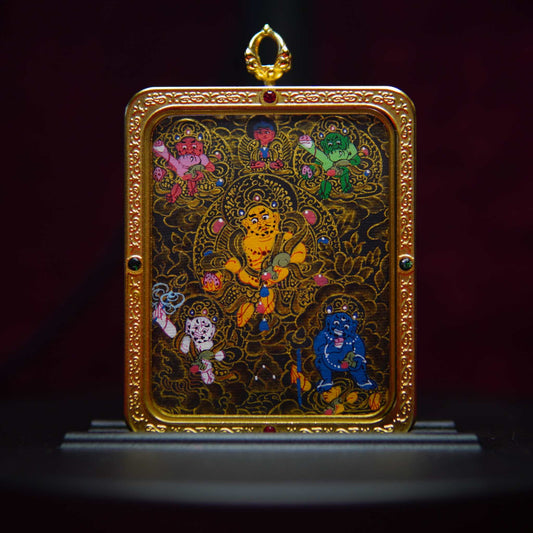
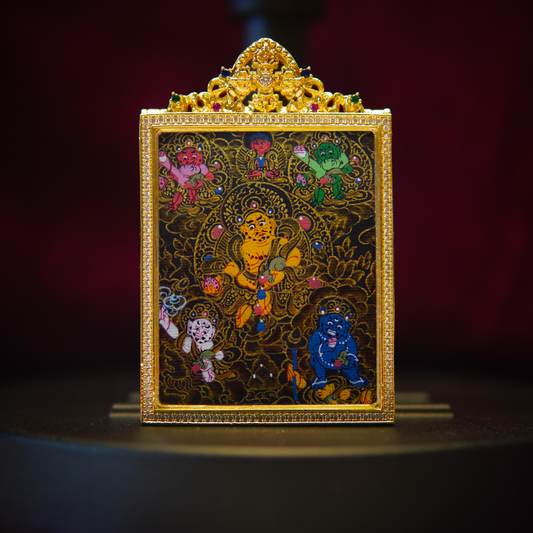
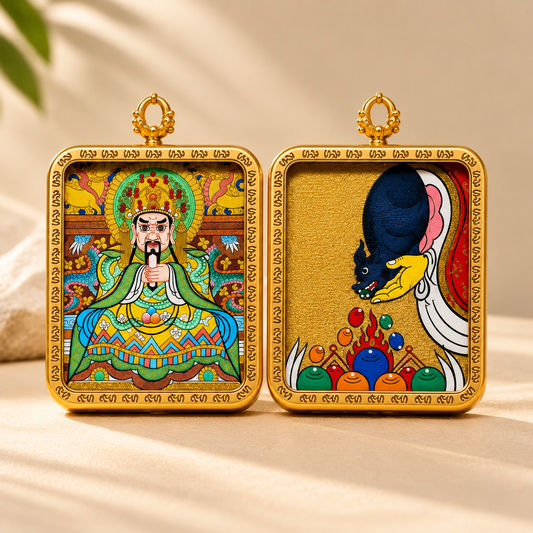
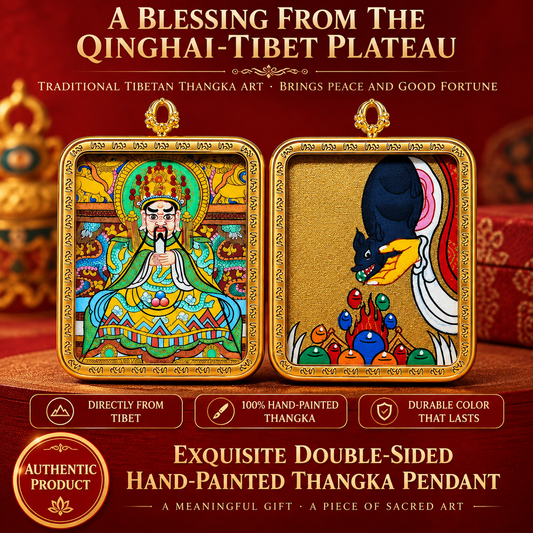
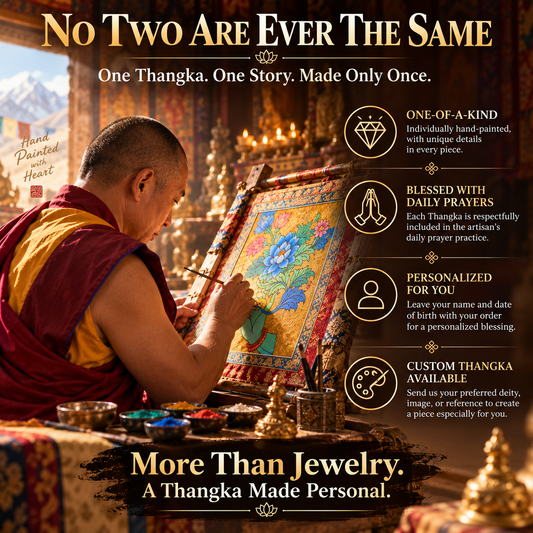
- Hand-painted miniatures of traditional Buddhist deities
- Every gesture (mudra), color, and ornament carries precise spiritual meaning
- Often based on centuries-old iconography manuals (sadhanas)
🔮 3. Empowerment & Ritual Blessing
✖️ Regular Pendants
- Rarely undergo any spiritual ritual
- No energetic activation
🎨 Thangka Necklaces
- Often empowered in a consecration ceremony by monks or lamas
- Can be filled with sacred items like:
- Mantra scrolls
- Tibetan blessing pills (甘露丸)
- Semi-precious stones (agate, turquoise)
- Infused with mantra energy and healing intention
These pendants are known as “sacred vessels”, not accessories.
🪬 4. Materials: Industrial vs. Devotional Craft
🧪 Regular Pendants
- Often made from synthetic or commercial metals
- Machine-finished in large batches
🖌️ Thangka Necklaces
- Made by skilled artisans in Nepal or Tibet
- Painted on tiny canvas or wood using natural pigments and gold detailing
- Ethically sourced with fair trade values in many cases
🧘♀️ 5. Daily Use & Spiritual Connection
🧍 Regular Pendants
- May be worn occasionally or daily, depending on style
- Rarely used in meditation or prayer
🙏 Thangka Necklaces
- Worn as a personal talisman
- Used to anchor attention during mantra recitation or meditation
- Reminds the wearer of their spiritual values and goals
🎁 Bonus: Great Gifts for Spiritual Seekers
Thangka pendants make meaningful gifts for:
- Yogis and meditators
- Buddhist practitioners
- People recovering from illness (Medicine Buddha)
- Anyone in need of daily spiritual support
- 🧘♂️ Conclusion
While regular pendants may carry aesthetic or symbolic meaning, Thangka necklaces offer a deeper spiritual experience. Each one is a handcrafted piece of sacred art, filled with devotion, symbolism, and energy. Whether you're beginning a spiritual journey or deepening your practice, a Thangka necklace becomes a daily reminder of compassion, wisdom, and inner peace.