Why Is Green Jambhala Green? The Meaning Behind Wealth and Accomplishing Activity
chenHenry🟢 If Jambhala Is a Wealth Deity, Why Does He Come in Different Colors?
Search for Jambhala in Tibetan Buddhist art and you may quickly notice something unusual.
There isn't just one.
Yellow Jambhala.
Red Jambhala.
Black Jambhala.
White Jambhala.
And Green Jambhala.
If all of them are associated in some way with prosperity, why do they need different colors?
Green Jambhala gives us an important clue.
His green body isn't simply an artist's preference—and it certainly isn't green because modern American money happens to be green.
Within Vajrayana Buddhist symbolism, green is closely associated with active or accomplishing activity.
That gives Green Jambhala a distinctive relationship with prosperity:
wealth connected with action, accomplishment and progress.
So what exactly does “accomplishing activity” mean?
 💰 Who Is Green Jambhala?
Green Jambhala is a green form of the Buddhist wealth deity Jambhala, associated with prosperity and accomplishing activity within Vajrayana Buddhist tradition.
Jambhala is broadly connected with wealth, resources, material support and the relief of hardship.
But different Jambhala forms should not simply be understood as the same deity offered in five decorative colors.
Their colors belong to a wider tantric visual and ritual language.
For Green Jambhala, the key concept is not only:
prosperity
but also:
activity.
This makes him particularly interesting when compared with Yellow Jambhala's strong wealth symbolism or Red Jambhala's association with magnetizing activity.
🟢 Why Is Green Jambhala Green?
Green has important associations with accomplishing or active activity within Vajrayana Buddhist symbolism.
That doesn't mean every green Buddhist figure has exactly the same meaning.
Context matters.
Green Tara, for example, is also green, but she is a completely different Buddhist figure with her own iconography and traditions.
Color functions as part of a larger symbolic system.
For Green Jambhala, green helps distinguish a form in which prosperity can be understood alongside effective activity and accomplishment.
This is why simply translating the image as:
“Green Wealth God”
misses much of what makes the form distinctive.
💵 Is Green Jambhala Green Because Money Is Green?
No.
It is an amusing coincidence for American viewers, but Green Jambhala's color has nothing to do with the color of U.S. dollar bills.
His Buddhist iconography developed long before modern American currency existed.
This distinction matters because it prevents a traditional Buddhist image from being rewritten around modern financial culture.
Green doesn't mean:
dollars.
It points toward a broader tantric association with accomplishing activity.
That gives us a much more interesting question:
What does accomplishment have to do with prosperity?
⚡ What Does “Accomplishing Activity” Mean?
This phrase can sound awkward in English.
It doesn't simply mean:
being successful.
Within Vajrayana Buddhism, accomplishing activity belongs to a broader framework of enlightened activity.
For a general audience, it can be understood as effective activity that brings beneficial purposes toward completion.
The emphasis is on doing.
Moving.
Completing.
Bringing something into effect.
This is very different from imagining prosperity as something that simply falls into your hands while you remain passive.
Green Jambhala's symbolism places activity beside prosperity.
That relationship is what makes the green form particularly distinctive.
💰 What Does Accomplishment Have to Do With Wealth?
Think about how prosperity actually develops in ordinary life.
Resources matter.
But resources without effective action can sit unused.
An opportunity matters.
But an opportunity that is never acted upon changes nothing.
A business idea matters.
But execution determines whether it ever becomes a business.
This does not mean Buddhist tradition is secretly teaching modern entrepreneurship.
It means the symbolic relationship between resources and effective activity remains understandable today.
For a modern viewer, Green Jambhala can therefore resonate with ideas such as:
💰 Resources
⚡ Action
🎯 Accomplishment
🌿 Progress
✨ Prosperity
The important thing is to distinguish this modern resonance from a claim that Green Jambhala guarantees success.
🌿 Does Green Also Mean Growth?
Green naturally makes modern viewers think of plants, renewal and growth.
That can be a meaningful personal association.
But we should distinguish it from the more specific traditional relationship between green and accomplishing activity.
In other words:
Growth can be a useful modern symbolic interpretation.
But we shouldn't pretend:
Green Jambhala is green because plants grow.
Keeping those layers separate makes the story more credible.
It also prevents Buddhist iconography from turning into generic color psychology.
🪷 Is Green Jambhala Only About Money?
No.
Like the broader Jambhala tradition, Green Jambhala should not be reduced to:
“wear this to get rich.”
Material resources matter because material hardship is real.
Resources can support: families,communities,education,Buddhist practice,charitable activity,
and generosity.
That is why prosperity is often a better word than simply “money.”
Green Jambhala adds another layer:
What can beneficial resources accomplish when they are put into action?
That question gives the image more depth than a simple promise of financial gain.
🤲 Where Does Generosity Fit In?
Jambhala imagery becomes much more Buddhist when wealth is connected with generosity.
If prosperity only means:
more for me,
the symbolism becomes indistinguishable from ordinary greed.
Resources can also make it possible to help others.
This does not mean financial stability is somehow selfish.
Having enough can reduce suffering and create the ability to give.
For a modern person drawn to Green Jambhala, this creates an interesting combination:
prosperity + action + beneficial use of resources.
🎨 How Can You Recognize Green Jambhala in a Thangka?
The most obvious clue is his color.
🟢 Green Body
But color alone is never enough.
Look at the entire composition.
Depending on the particular form and painting, you may also notice:
👑 Crown & Ornaments — richly detailed attributes of the deity
👐 Ritual Implements — important for identifying the specific form
🪷 Sacred Seat & Surroundings — lotus imagery, clouds and other Buddhist visual elements
🔥 Dynamic Presence — Green Jambhala can appear with a powerful rather than purely peaceful character
✨ Richly Layered Colors — turquoise, red, blue, gold and orange often create strong contrast with the green body
Learning these details changes the experience of looking at a Thangka.
You stop seeing:
“the green one.”
You start recognizing:
Green Jambhala.
💼 Why Does Green Jambhala Appeal to Entrepreneurs?
The answer isn't that Buddhism created a deity specifically for startup founders.
The connection is more subtle.
Entrepreneurs live in a world of:
resources,action,execution,progress,uncertainty,and goals.
Green Jambhala combines prosperity symbolism with accomplishing activity.
That naturally resonates with people trying to build something.
But the pendant does not replace:
planning,skill,discipline,or good judgment.
It can instead represent an intention:
May the resources I have be put into effective action.
That's a much stronger meaning than:
Make me successful.
📿 Green Jambhala in Miniature Thangka Art
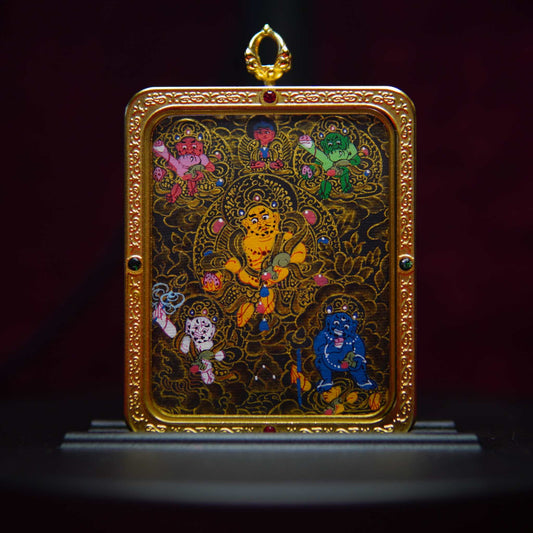
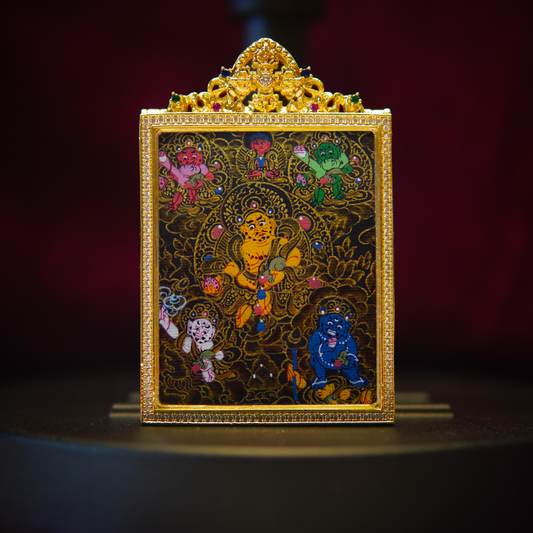
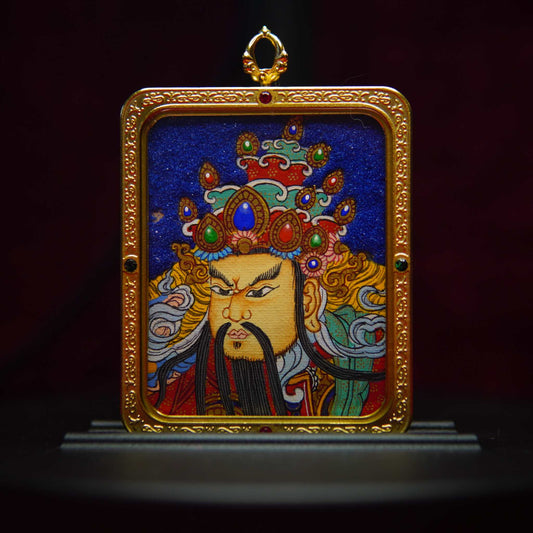
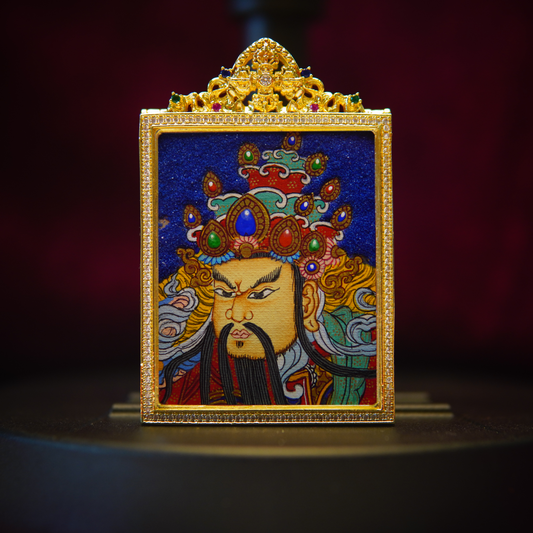
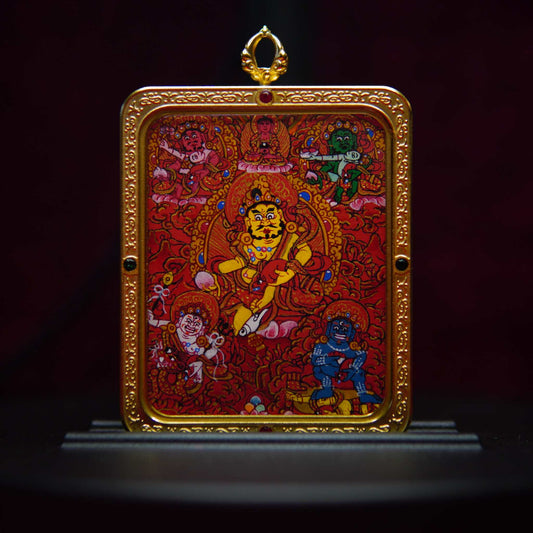
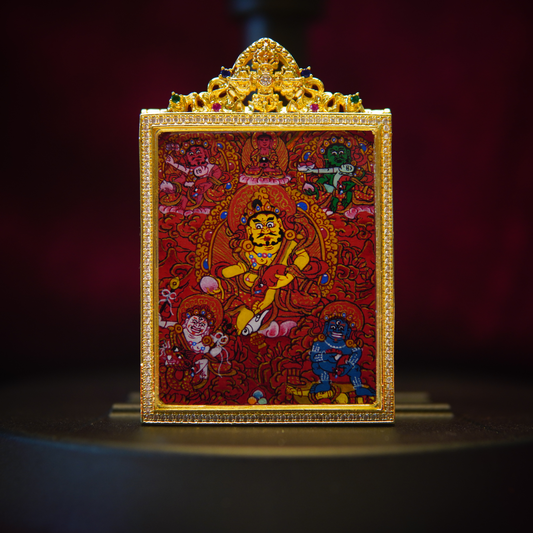
Our hand-painted Green Jambhala Tibetan Thangka pendant brings the distinctive green form and richly layered Buddhist imagery into a miniature painting only a few centimeters across.
Each piece is individually painted by hand, so subtle differences in expression, color, linework and surrounding details naturally occur.
For practitioners, Green Jambhala may carry specific religious significance.
For others drawn to Buddhist art, his imagery can represent an unusual combination of:
💰 Prosperity
⚡ Accomplishment
🌿 Progress
🎯 Purposeful Action
🤲 Generosity
→ Explore the Hand-Painted Green Jambhala Thangka Pendant
But does that make Green Jambhala specifically a deity for entrepreneurs and business success?
→ Is Green Jambhala Really for Business Success?
❓Quick Questions About Green Jambhala
What does Green Jambhala represent?
Green Jambhala is associated with prosperity and accomplishing activity within the broader Jambhala wealth tradition.
Why is Green Jambhala green?
Green is associated in Vajrayana Buddhist symbolism with active or accomplishing activity.
Is Green Jambhala green because money is green?
No. His iconographic color predates modern U.S. currency and belongs to Buddhist tantric symbolism.
Does Green Jambhala guarantee success?
No. A Green Jambhala image can have devotional or symbolic meaning but should not be presented as guaranteeing financial or professional outcomes.