Which Thangka Should I Choose? Meaning & Symbolism Guide
chenHenryGreen Tara.
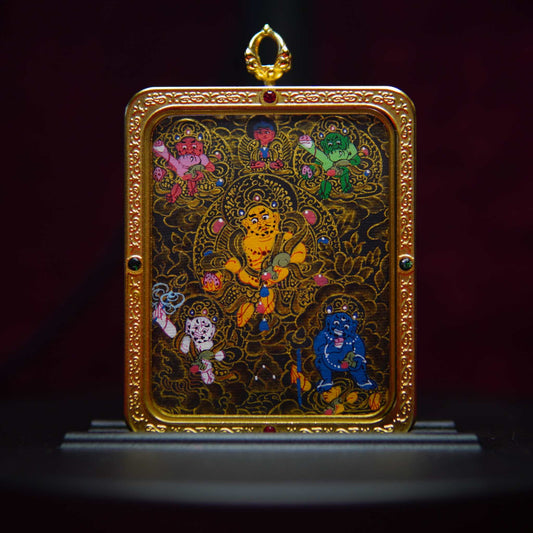
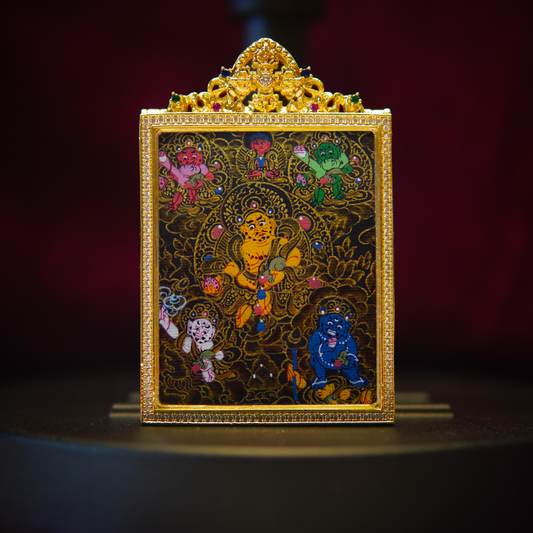
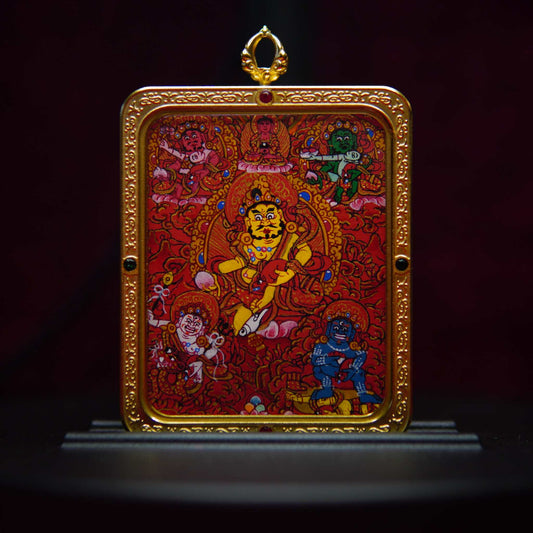
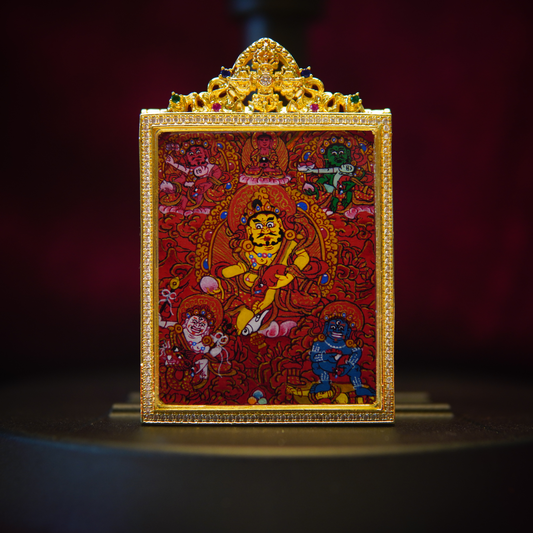
Yellow Jambhala.
Medicine Buddha.
Manjushri.
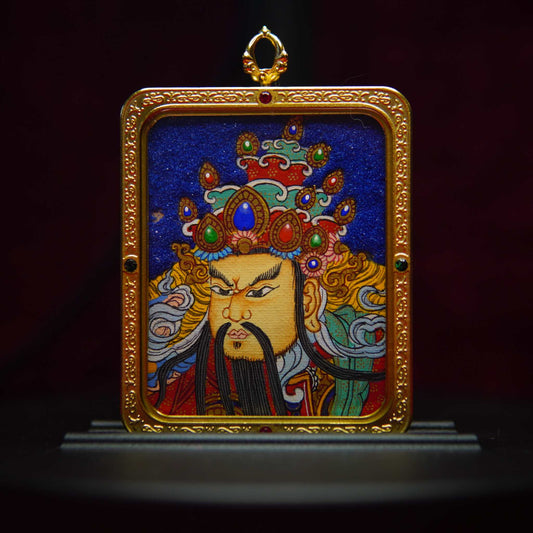
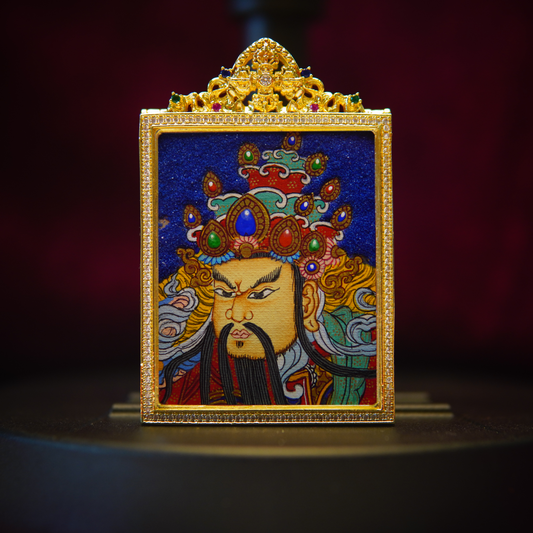
Mahakala.
The more Tibetan Buddhist art you discover, the harder one question becomes:
Which Thangka should I choose?
If you're new to Thangka art, don't begin by asking:
“Which Buddha is the most powerful?”
Begin with something more personal:
What do you want to carry with you right now?
Wisdom for an important decision?
Courage for a new beginning?
Prosperity for something you're building?
Compassion during a difficult time?
Protection as you move through uncertainty?
Your answer can give you somewhere to begin.
🪷 Choose by Meaning, Not Just Appearance
A Thangka can be visually beautiful while also carrying centuries of Buddhist symbolism.
Different Buddhas, bodhisattvas, deities, and protectors have distinct roles and associations within Buddhist traditions.
So instead of choosing only by color or appearance, consider the qualities represented by the figure.
Here's the quick version:
| What Speaks to You? | Consider |
|---|---|
| 💰 Prosperity & Generosity | Yellow Jambhala |
| 🧠 Wisdom & Clarity | Manjushri |
| 💚 Compassion & Courage | Green Tara |
| 🤍 Longevity & Serenity | White Tara |
| 💙 Healing Symbolism & Compassion | Medicine Buddha |
| 🙏 Compassion & Mercy | Avalokiteshvara |
| 🪷 Awakening & Awareness | Shakyamuni Buddha |
| 🛡️ Protection & Overcoming Obstacles | Mahakala |
| ⚡ Spiritual Strength & Courage | Vajrapani |
| 🔥 Determination & Steadfastness | Acala |
| 💎 Prosperity & Guardianship | Vaisravana |
| 🌸 Auspiciousness & Protection | Zhaki Lhamo |
Now let's make the choice more personal.
💰 “I'm Building Something New”
Yellow Jambhala — Prosperity & Generosity
Yellow Jambhala is a Buddhist wealth deity traditionally associated with prosperity, abundance, and generosity.
That last word matters:
Generosity.
Wealth does not have to mean accumulation for its own sake. Resources can provide stability, create opportunities, support families, and make generosity possible.
That gives Yellow Jambhala a deeper meaning than simply:
“I want to become rich.”
His symbolism may resonate particularly with someone starting a business, beginning a new career, or working toward greater financial stability.
Choose Yellow Jambhala if:
“I want to build abundance without forgetting generosity.”
May resonate with: entrepreneurs · business owners · professionals · new ventures
Yellow Jambhala Thangka Pendant Necklace
 🧠 “I Have an Important Decision to Make”
Manjushri — Wisdom & Clarity
Manjushri is the bodhisattva traditionally associated with transcendent wisdom in Mahayana Buddhism.
One of his most recognizable symbols is a flaming sword.
It isn't an ordinary weapon.
The sword represents wisdom cutting through ignorance, confusion, and delusion.
That symbolism can feel surprisingly relevant today.
An important exam.
A complicated decision.
A new business.
A creative block.
A moment when every possible direction seems equally uncertain.
Choose Manjushri if:
“I want to see clearly before I act.”
May resonate with: students · researchers · creators · founders · decision-makers
💚 “I'm Entering a New Chapter”
Green Tara — Compassion & Courage
Green Tara is traditionally associated with active compassion, protection from fear, and swift enlightened action.
She is often depicted in a posture that conveys readiness rather than withdrawal.
That makes her particularly meaningful during moments of transition.
A new city.
A new career.
A relationship ending.
A new one beginning.
A decision to start again.
Green Tara doesn't have to represent a life without fear.
Her symbolism can remind us of something more realistic:
we can move forward even when fear is already present.
Choose Green Tara if:
“I want to move through fear without losing compassion.”
May resonate with: new beginnings · major transitions · caregivers · meditators
🤍 “I Want Something Meaningful for My Parents”
White Tara — Longevity & Serenity
White Tara is traditionally associated with compassion, serenity, and longevity.
Her imagery is peaceful and contemplative, and she is often depicted with seven eyes symbolizing compassionate awareness.
For that reason, White Tara can carry a particularly gentle meaning when chosen for a parent, elder, or someone whose long life and well-being you deeply value.
Not as a promise of longevity—
but as an expression of what you wish for them.
Choose White Tara if:
“I want to express a wish for peace, compassion, and long life.”
May resonate with: parents · elders · caregivers · meaningful family gifts
White Tara Thangka Pendant Necklace
 💙 “Someone I Love Is Going Through a Difficult Time”
Medicine Buddha — Healing Symbolism & Compassion
Medicine Buddha, or Bhaiṣajyaguru, is strongly associated in Buddhist tradition with healing, compassion, and the relief of suffering.
That doesn't mean a Medicine Buddha pendant should be presented as something that cures illness or replaces medical treatment.
Its meaning is spiritual and symbolic.
The wish for suffering to be relieved.
The intention to care.
The reminder to approach difficulty with compassion.
Choose Medicine Buddha if:
“I want to keep compassion and well-being close to mind.”
May resonate with: caregivers · meditators · people supporting someone through a difficult period
Medicine Buddha Thangka Pendant Necklace
 🙏 “I Want Compassion to Guide Me”
Avalokiteshvara — Compassion & Mercy
Avalokiteshvara is the bodhisattva of compassion and one of the most important figures across Mahayana Buddhist traditions.
In Tibetan Buddhism, the four-armed form is especially recognizable.
His imagery centers attention on compassionate concern for sentient beings.
That can make Avalokiteshvara particularly meaningful for people whose lives involve caring for others.
Parents.
Teachers.
Caregivers.
Or simply someone trying to become a kinder human being.
Choose Avalokiteshvara if:
“I want compassion to shape the way I treat others.”
🪷 “I Want to Return to Awareness”
Shakyamuni Buddha — Awakening & Wisdom
Shakyamuni Buddha refers to Siddhartha Gautama, the historical Buddha whose awakening forms the foundation of Buddhism.
If you're overwhelmed by the many figures found in Buddhist art and don't know where to begin, Shakyamuni can be a natural starting point.
His image points toward the heart of Buddhist practice:
Awareness.
Wisdom.
Meditation.
Understanding suffering.
Awakening.
Choose Shakyamuni Buddha if:
“I want to return to awareness.”
May resonate with: meditators · students of Buddhism · those beginning a Buddhist practice
Shakyamuni Buddha Thangka Pendant Necklace
 🛡️ “I Want Protection While Facing Obstacles”
Mahakala — Protection & Overcoming Obstacles
Mahakala looks very different from peaceful figures such as Tara.
His appearance is fierce.
But fierce Buddhist imagery should not automatically be interpreted as evil or aggression.
Mahakala is an important protector figure in Tibetan Buddhist traditions, with specific forms and practices varying by lineage.
His symbolism can resonate with someone drawn to the idea of protecting what matters and confronting obstacles rather than avoiding them.
Choose Mahakala if:
“I want the strength to protect what matters and face what stands in the way.”
⚡ “I Need Courage and Spiritual Strength”
Vajrapani — Power & Courage
Vajrapani is a major bodhisattva associated with spiritual power and strength in Mahayana and Vajrayana Buddhist traditions.
His fierce appearance communicates energy rather than passivity.
Where Manjushri represents wisdom and Avalokiteshvara compassion, Vajrapani is traditionally connected with power.
Choose Vajrapani if:
“I want strength behind my intentions.”
May resonate with: people facing demanding challenges · disciplined practitioners · those drawn to courage
 🔥 “I Know What I Need to Do. I Need to Keep Going.”
Acala — Determination & Steadfastness
Acala is a wrathful Buddhist figure associated with immovability and steadfast determination, particularly within Esoteric Buddhist traditions.
His fierce appearance expresses something uncompromising:
Don't be moved away from what matters.
There are moments when we don't need another idea.
We already know what to do.
The challenge is continuing.
Choose Acala if:
“I want the determination to stay the course.”
💎 “I'm Drawn to Prosperity and Guardianship”
Vaisravana — Prosperity & Protection
Vaisravana is an important Buddhist guardian figure associated with protection and wealth.
He is one of the Four Heavenly Kings and has an especially prominent place in Tibetan Buddhist visual culture.
His symbolism combines two ideas that naturally belong together:
Resources.
And responsibility for what is protected.
Choose Vaisravana if:
“I want prosperity with a sense of responsibility and guardianship.”
🌸 “I'm Drawn to Zhaki Lhamo”
Zhaki Lhamo — Protection & Auspiciousness
Zhaki Lhamo is particularly associated with Tibetan popular devotional culture and is commonly approached in connection with protection, auspiciousness, and worldly well-being.
Her popularity also means that many modern claims circulate around her online.
Rather than treating every commercial promise as Buddhist doctrine, it is better to understand her within the particular devotional and cultural traditions surrounding her.
Choose Zhaki Lhamo if:
“I feel a personal connection to her protective and auspicious symbolism.”
 🔮 What If More Than One Figure Speaks to You?
That's normal.
Human beings aren't one-dimensional.
You may want:
Manjushri's clarity and Green Tara's courage.
Jambhala's prosperity and Shakyamuni's awareness.
Vajrapani's strength and Avalokiteshvara's compassion.
You don't need to turn choosing a Thangka into a personality test.
Instead ask:
What feels most relevant to this chapter of my life?
That answer may change over time.
And that's okay.
🧿 What About a Zodiac Guardian Buddha?
You may encounter the terms “Zodiac Buddha,” “Birth Buddha,” or “Guardian Buddha” when shopping for Buddhist jewelry, particularly in East Asian cultural contexts.
Choosing according to a birth-year or zodiac association can be meaningful within the traditions where those systems are used.
But it is not the only way to choose a Thangka.
You may also choose according to:
🪷 Your Buddhist practice or teacher's guidance
💚 A figure you already feel connected with
🧠 A quality you want to cultivate
📖 Traditional symbolism you want to understand more deeply
✨ An image that repeatedly draws your attention
There isn't one universal rule that applies to every Buddhist tradition.
✨ What If I Simply Love One of the Images?
Then start there.
Sometimes you encounter a Buddhist figure before you understand the symbolism.
And still—
you keep looking.
Instead of immediately buying because the image “feels powerful,” use that curiosity as an invitation.
Find out who the figure is.
Learn what they represent.
Learn something about the tradition.
Then see whether the connection becomes deeper.
Sometimes connection begins before explanation.
📿 Choose a Thangka That Means Something to You
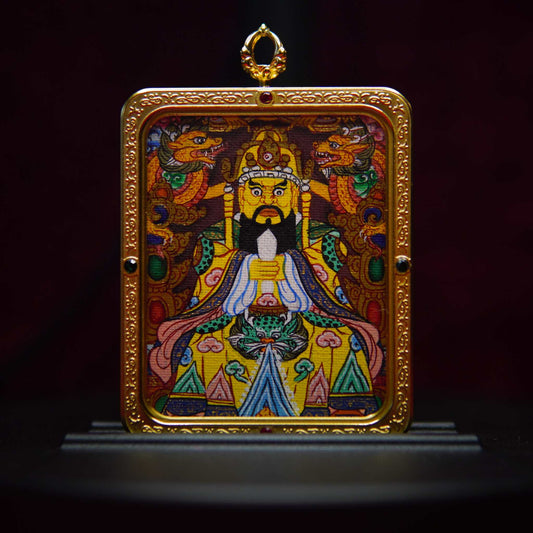
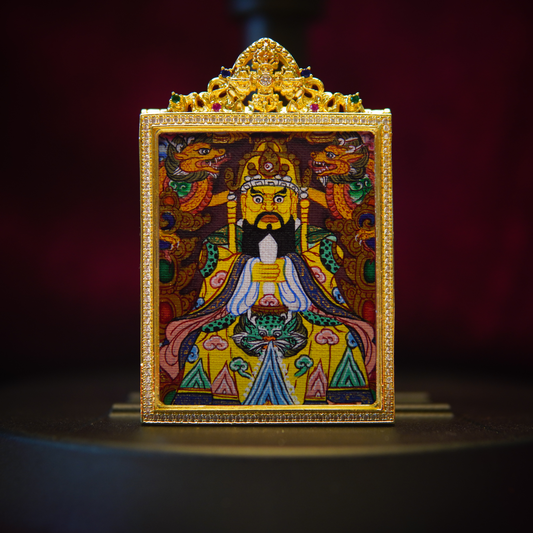
Our double-sided Tibetan Thangka pendants feature miniature artwork individually painted by hand on both the front and reverse.
Choose from Green Tara, Jambhala, Manjushri, Medicine Buddha, Mahakala, Guru Rinpoche and many other Buddhist figures and designs.
The front begins with the figure you choose.
The meaning begins with you.
→ Explore Hand-Painted Double-Sided Thangka Pendants
Don't choose only what looks beautiful.
Choose what means something to you.
❓FAQ: Choosing a Thangka
Which Thangka is associated with wisdom?
Manjushri is one of the clearest choices for wisdom. He is the bodhisattva traditionally associated with transcendent wisdom, and his flaming sword symbolizes wisdom cutting through ignorance.
Which Buddhist figure is associated with prosperity?
Yellow Jambhala is traditionally associated with prosperity, wealth, abundance, and generosity. Vaisravana is also associated with wealth as well as guardianship and protection.
Which Thangka represents compassion?
Avalokiteshvara is the bodhisattva of compassion. Green Tara is also strongly associated with compassion, particularly active compassion and protection from fear.
Which Thangka is associated with courage?
Green Tara and Vajrapani can both be relevant, but in different ways. Green Tara is associated with compassionate action and protection from fear, while Vajrapani represents spiritual strength and power.
Which Thangka is meaningful for parents?
White Tara can be particularly meaningful because of her traditional associations with compassion, serenity, and longevity. The appropriate choice ultimately depends on the recipient and their beliefs.
Do I have to choose according to my zodiac sign?
No. Zodiac or birth-Buddha systems exist in particular cultural traditions, but they are not a universal requirement for choosing Buddhist art. Practice, symbolism, personal connection, and guidance from one's Buddhist tradition can also inform the choice.