Why Did Ksitigarbha Make a Vow So Impossible to Complete?
chenHenry♾️ Imagine Making a Promise With No Obvious Finish Line
Imagine making a promise you may never see completed.
Not for a week.
Not for a year.
Not even for one lifetime.
But for as long as suffering beings remain in need of help.
This is the kind of vow that defines Ksitigarbha Bodhisattva.
His story isn't powerful because the task is easy.
It is powerful because the task seems almost impossible.
If beings are countless and suffering continues to arise, when does the work end?
Why would anyone choose a vow with no convenient finish line?
To understand Ksitigarbha, you have to understand why the promise matters more than completing a checklist.
 🪷 What Is Ksitigarbha's Great Vow?
Ksitigarbha is renowned in Mahayana Buddhism for vast vows to aid suffering beings, particularly those in extremely difficult realms and conditions.
In East Asian Buddhism, his commitment is often remembered through powerful formulations emphasizing that he will continue helping beings in suffering rather than seeking final Buddhahood only for himself.
This is why Ksitigarbha is known in Chinese as Dizang Bodhisattva and became deeply associated with compassion toward beings in the hell realms.
The popular summaries of his vow are dramatic.
But the heart of the story is simple:
Do not abandon beings simply because helping them is difficult.
♾️ Why Does the Vow Seem Impossible?
Because suffering has no obvious finish line.
Help one person and another may still need help.
Solve one problem and another appears.
Care for one generation and another follows.
From an ordinary goal-setting perspective, this sounds terrible.
We prefer tasks that can be finished.
Check the box.
Measure the result.
Move on.
Ksitigarbha's vow operates differently.
Its meaning is not dependent on knowing exactly when the work will end.
The commitment itself expresses the bodhisattva ideal.
This makes Ksitigarbha a powerful symbol of perseverance in compassion.
🤍 Why Would a Bodhisattva Put Others Before His Own Completion?
This question goes to the heart of the bodhisattva ideal.
A bodhisattva is not simply pursuing spiritual achievement as a private escape from everyone else.
Compassion for other beings is central to the path.
Ksitigarbha dramatizes that idea in an extreme form.
His story asks:
What if your spiritual aspiration became inseparable from your refusal to abandon others?
That is why his vow feels so different from a personal promise such as:
“I will become calmer.”
or:
“I will become enlightened.”
The focus turns outward.
The vow becomes relational.
👩 What Does Ksitigarbha's Story Have to Do With a Mother?
Some of the most memorable narratives associated with Ksitigarbha in the Ksitigarbha Bodhisattva Pūrvapraṇidhāna Sūtra involve previous-life stories centered on profound concern for a mother.
In these scriptural narratives, figures traditionally understood as former lives associated with Ksitigarbha make extraordinary vows in response to the suffering of their mothers and, ultimately, of countless beings.
This is one reason Ksitigarbha's story can feel unexpectedly personal.
The enormous vow doesn't begin as an abstract philosophical theory.
It is told through relationships people immediately understand:
a child,
a parent,
fear of suffering,
and the desperate wish to help someone you love.
From that intimate concern, the vow expands outward.
Compassion for one being becomes compassion for many.
 🔥 Why Is Ksitigarbha So Closely Connected With Hell?
Because the Great Vow is most striking when directed toward those experiencing the greatest suffering.
If compassion only reaches comfortable places, its limits remain obvious.
Ksitigarbha's association with the hell realms pushes the idea to its extreme.
The question becomes:
Is there anyone suffering so badly that compassion should stop trying to reach them?
Ksitigarbha's traditional answer is expressed through the vow itself.
This is why calling him merely:
“the god of hell”
misses almost everything.
His connection with hell is really a story about the reach of compassion.
For the full explanation:
→ Why Is Ksitigarbha Called the Bodhisattva of Hell?
🌿 What Can an “Impossible Vow” Mean Today?
Most people are not making vows across countless lifetimes.
But the emotional structure of Ksitigarbha's story is surprisingly familiar.
Think about:
caring for an aging parent,
raising a child,
supporting someone through grief,
staying beside a family member through a difficult period,
teaching,
caregiving,
or working on a problem that cannot be solved overnight.
Some responsibilities do not offer instant closure.
You continue because the person or purpose matters.
This does not make modern caregiving identical to Ksitigarbha's religious vow.
But it helps explain why the story remains emotionally understandable.
The vow speaks to the experience of continuing to care even when care is difficult.
🧭 Why Is Ksitigarbha Associated With Guidance?
Guidance makes sense when you understand the vow.
Ksitigarbha's compassion is not represented as watching suffering from a safe distance.
His identity is associated with going toward beings in difficult conditions.
That naturally creates symbolism around:
🧭 Guidance
🤍 Compassion
🛡️ Protection
🌿 Perseverance
🪷 Commitment
For someone moving through a major life transition, this can make Ksitigarbha imagery particularly meaningful.
The symbolism isn't:
“You will never face difficulty.”
It is closer to:
“Do not lose direction simply because the path is difficult.”
 🧘 Why Isn't Ksitigarbha's Vow About Personal Success?
Because the scale of the vow changes what success means.
Modern culture often measures success individually:
Did I achieve the goal?
Did I earn enough?
Did I win?
Did I finish?
Ksitigarbha presents a very different model.
Success isn't defined only by arriving first.
The willingness to remain engaged with suffering becomes meaningful in itself.
This is one reason Ksitigarbha imagery can resonate with:
caregivers,
parents,
teachers,
people in service professions,
and anyone carrying a long-term responsibility for others.
Again, these are modern points of connection—not replacements for the traditional Buddhist meaning.
But they show why an ancient vow can still feel surprisingly human.
🎁 When Can a Ksitigarbha Thangka Be a Meaningful Gift?
Ksitigarbha is not an obvious “celebration gift” in the same way a prosperity deity might be.
That can actually make the image more meaningful in certain situations.
It may resonate with someone:
going through grief,
facing uncertainty,
caring for a family member,
entering a difficult life transition,
taking on a major responsibility,
or committed to helping others.
The message is not:
“This pendant will remove every obstacle.”
It can be:
“May you have compassion, direction and perseverance through whatever comes next.”
That is a much more specific reason to choose Ksitigarbha rather than a generic Buddhist symbol.
🎨 The Great Vow Inside a Miniature Thangka
A Thangka pendant is physically small.
The story behind Ksitigarbha is anything but.
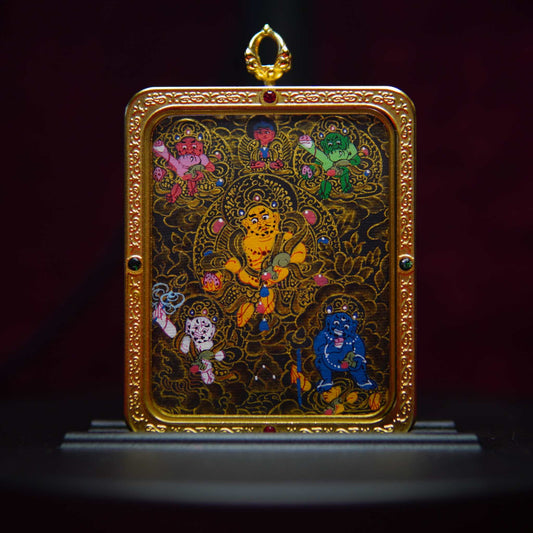
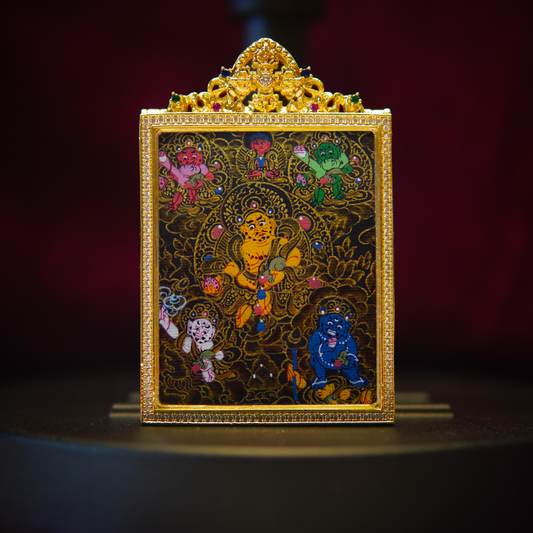
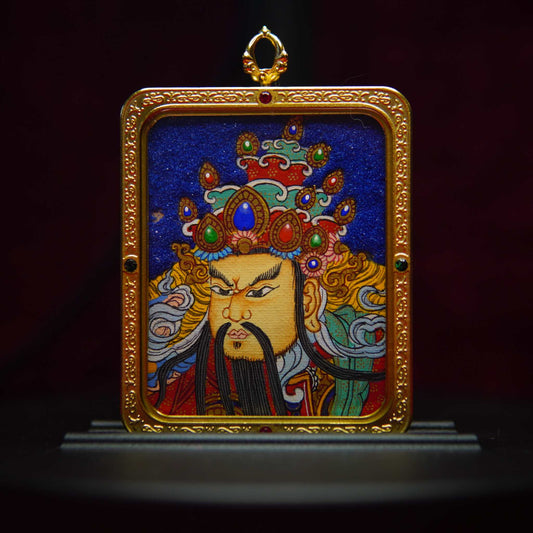
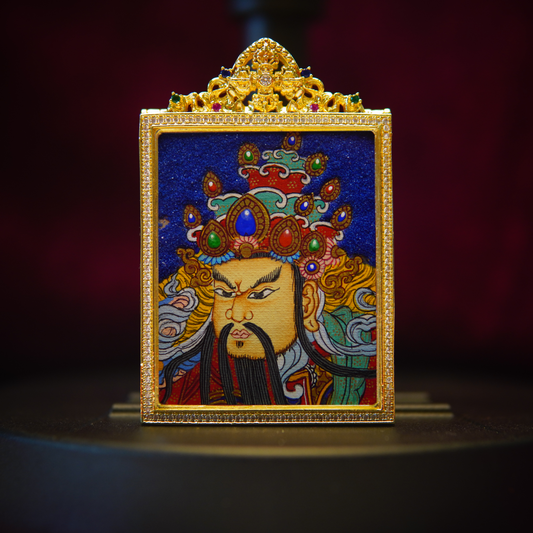
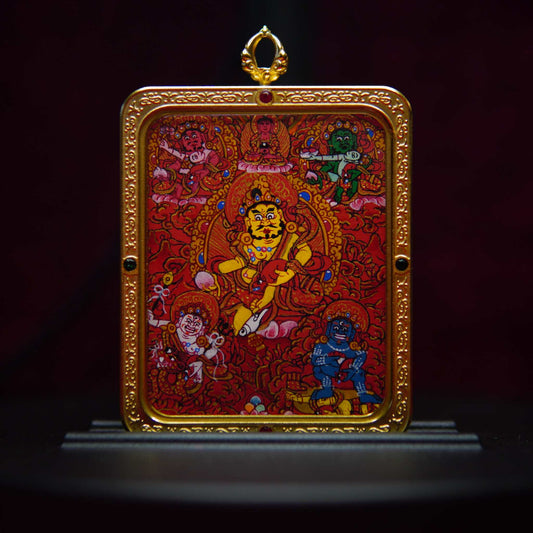
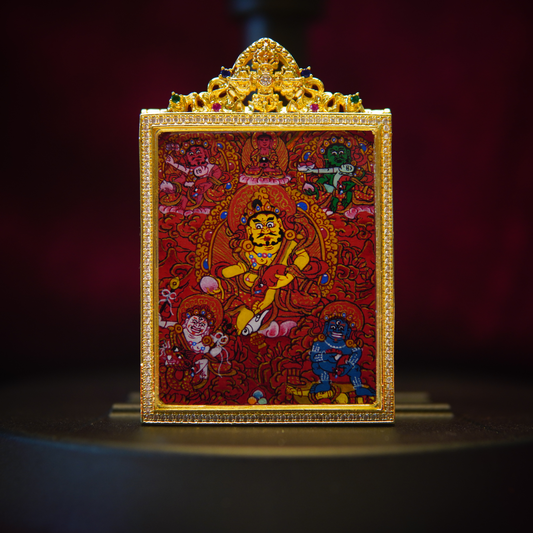
Our hand-painted Ksitigarbha Bodhisattva Tibetan Thangka pendant presents the bodhisattva within detailed Buddhist imagery, with each miniature painting individually created by hand.
Different designs may vary in posture, colors, surrounding figures and sacred details.
Those variations are part of the handmade nature of the work.
Once you know Ksitigarbha's story, the pendant is no longer simply:
a Buddhist figure associated with protection.
It represents something more specific:
the determination to keep compassion alive even when the task seems impossible.
→ Explore the Hand-Painted Ksitigarbha Bodhisattva Thangka Pendant

❓Quick Questions About Ksitigarbha's Great Vow
What is Ksitigarbha's Great Vow?
Ksitigarbha is renowned for vast vows to aid suffering beings, particularly those experiencing extremely difficult states and conditions, rather than focusing only on his own attainment.
Why is Ksitigarbha's vow considered extraordinary?
Because the commitment extends toward countless suffering beings and has no easy or immediate endpoint. It represents extraordinary compassion and perseverance.
Why is Ksitigarbha associated with the hell realms?
His association with hell reflects the reach of his compassionate vow toward beings experiencing profound suffering—not a role as the ruler or punisher of hell.
What does Ksitigarbha symbolize today?
Within his Buddhist context, major themes include Great Vow, compassion, guidance and perseverance. For modern viewers, these themes may also resonate with long-term care, responsibility and continuing to help others through difficult circumstances.
Is Ksitigarbha only connected with death?
No. Although Ksitigarbha has important associations with the deceased and difficult realms in East Asian Buddhist traditions, his broader symbolism centers on compassionate vows and helping suffering beings.