Thangka Necklace Rules & Taboos: What You Should Know Before Wearing One
TapitaA Thangka necklace is more than a beautiful piece of Tibetan jewelry. It carries centuries of Buddhist artistic tradition, spiritual symbolism, and intricate craftsmanship.
But if you're thinking about wearing one, you might have a few questions. Are there any taboos associated with Thangka necklaces? Can you wear one every day? Is it disrespectful to wear a Buddha image as jewelry?
The answers aren't as complicated as you might think. Much depends on your intentions, how you treat the pendant, and the particular Buddhist tradition you follow.
What Is a Thangka Necklace?
Traditional Thangkas are Tibetan Buddhist paintings depicting Buddhas, bodhisattvas, protective deities, and sacred teachings. They have long been used for religious practice, contemplation, and artistic expression.
A Thangka necklace brings this artistic tradition into a miniature, wearable form.
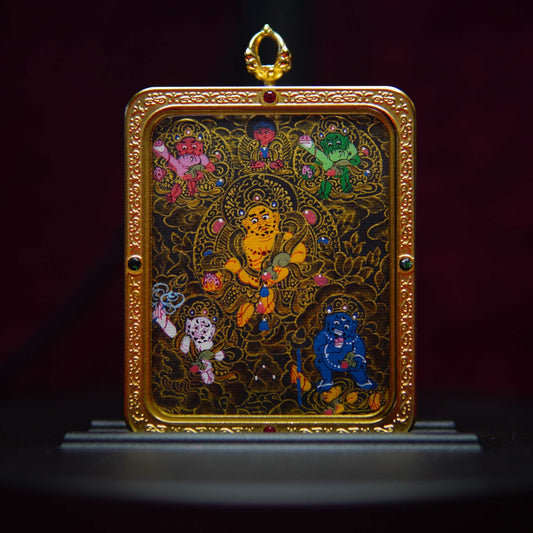
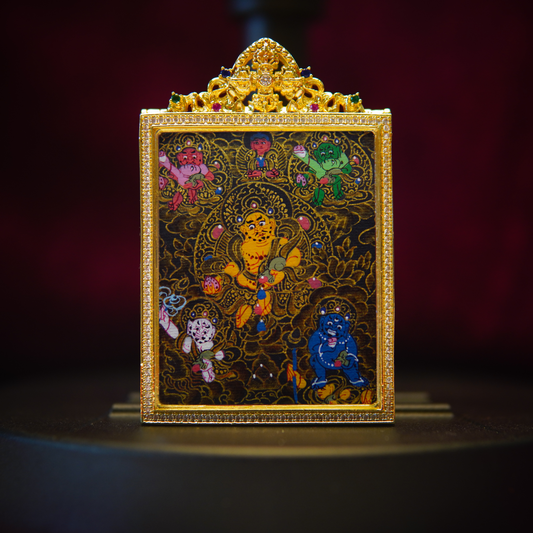
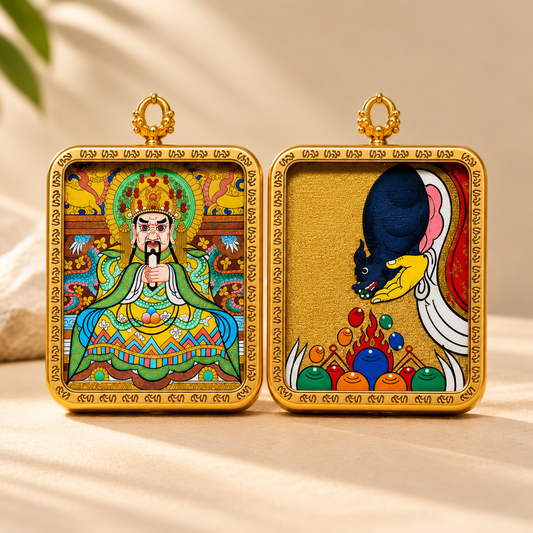
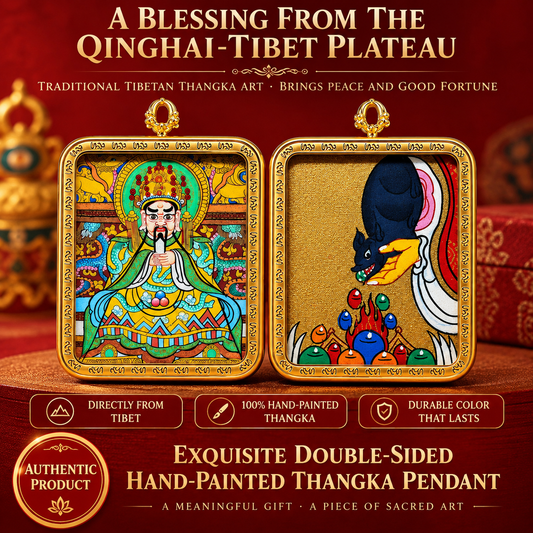
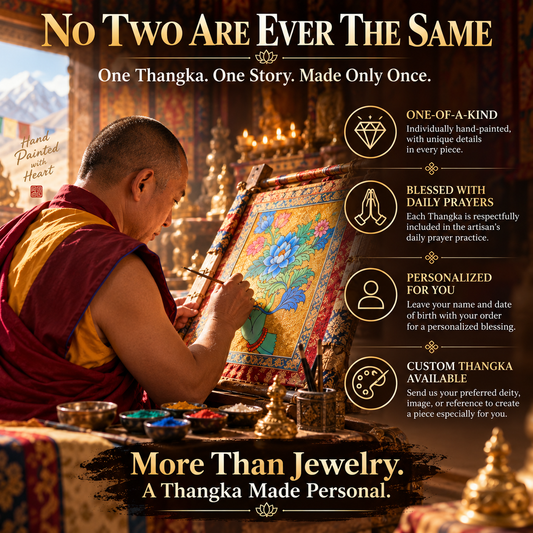
Unlike ordinary jewelry, a hand-painted Thangka pendant may feature detailed Buddhist imagery created through delicate brushwork. Even at a small scale, the artist must carefully consider the deity's posture, facial expression, colors, and symbolic objects.
For some wearers, the pendant serves as a reminder of compassion, wisdom, or spiritual practice. Others appreciate it as an expression of Tibetan culture and miniature religious art.
These meanings can coexist, but understanding the sacred imagery is an important part of wearing it respectfully.
1. Is It Disrespectful to Wear a Thangka Necklace?
Not necessarily.
Wearing Buddhist imagery as jewelry is viewed differently across Buddhist communities and cultural traditions. Some people consider a small Buddha pendant a meaningful reminder of their spiritual values. Others believe sacred images should primarily be displayed or used in religious settings rather than worn as fashion accessories.
The most important consideration is respect.
If you choose to wear a Thangka necklace, avoid treating its religious imagery as a joke, an object of mockery, or merely a fashionable symbol without regard for its meaning.
You don't necessarily have to be Buddhist to appreciate a Thangka pendant. However, taking time to learn about the figure depicted can make wearing it more meaningful.
If you follow a particular Buddhist lineage, your teacher or community may have additional guidance.
2. Can You Wear a Thangka Necklace Every Day?
Many people choose to wear small Thangka pendants daily, but everyday wear involves both practical and cultural considerations.
From a practical perspective, hand-painted miniature artwork requires more careful handling than ordinary metal jewelry.
To protect your pendant:
- Avoid exposing it to perfume, harsh cleaning products, or excessive moisture.
- Remove it before swimming, showering, or activities that could damage the artwork.
- Store it separately from jewelry that could scratch its surface.
- Avoid prolonged exposure to direct sunlight and extreme heat.
From a religious perspective, some practitioners prefer to remove sacred imagery during activities they consider inappropriate. Others emphasize mindful handling rather than a fixed set of rules.
There is no single universal rule followed by every Buddhist community.
3. Can You Wear a Thangka Necklace While Sleeping?
There is no universal Buddhist prohibition against sleeping while wearing a Thangka necklace.
However, removing it before bed is usually a sensible choice.
A delicate pendant may become tangled in bedding, experience pressure, or suffer damage while you move during sleep.
For hand-painted Thangka pendants, careful storage is especially important.
Place the necklace in a clean, soft pouch or jewelry box when it is not being worn.
Some Buddhist practitioners may also prefer to keep sacred images in a respectful place overnight.

Abundance & Career Success thangka Pendant
Attract money flow with sacred Tibetan abundance mantras
4. Can You Wear a Thangka Necklace in the Bathroom?
This is one of the most common questions surrounding Buddhist pendants.
In some Buddhist traditions, practitioners avoid bringing sacred images into bathrooms or other places considered unsuitable for religious objects.
Other practitioners take a more flexible approach, focusing on respectful treatment rather than strict physical restrictions.
There is no single rule that applies to all Buddhists.
If you are concerned about religious etiquette, removing the pendant before bathing is a considerate option.
It also helps protect miniature paintings from water, humidity, soap, and cosmetic products.
For specific religious guidance, consult a knowledgeable teacher within the tradition associated with your pendant.
5. Does a Thangka Necklace Need to Be Blessed?
Some Tibetan Buddhist practitioners value blessings or consecration rituals performed by qualified religious teachers.
These practices may have particular significance within certain lineages.
However, not every Thangka necklace must undergo a blessing ritual before someone can own, appreciate, or wear it.
A blessing should not be confused with a guarantee of wealth, protection, good fortune, or healing.
If a seller claims that a pendant has been blessed, it is reasonable to ask where, when, and by whom the blessing was performed.
A genuine hand-painted Thangka pendant can also hold cultural and artistic value regardless of whether it has undergone a religious ceremony.

Healing & Spiritual Protection Thangka Necklace
Ancient Buddhist energy shield for modern stress
6. Does the Buddha or Deity on Your Pendant Matter?
Yes. Different figures in Tibetan Buddhist art carry different meanings and associations.
For example:
Green Tara is widely associated with compassion, enlightened activity, and protection from fear.
Manjushri represents wisdom and the understanding that cuts through ignorance.
Medicine Buddha is associated with healing aspirations and the alleviation of suffering.
Yellow Jambhala is associated with generosity, prosperity, and the cultivation of favorable conditions.
These associations are part of Buddhist religious traditions. They should not be interpreted as promises that wearing a pendant will automatically produce particular outcomes.
Some images, especially those connected with advanced tantric practices or specific protective deities, may carry additional religious considerations.
If you are unsure about a particular figure, learning its traditional meaning is a good place to begin.
7. Can You Give a Thangka Necklace as a Gift?
A hand-painted Thangka necklace can be a thoughtful gift, particularly for someone interested in Buddhist art, Tibetan culture, or meaningful jewelry.
However, consider the recipient's beliefs and preferences.
Someone who practices Buddhism may appreciate a pendant featuring a deity meaningful to their tradition. Another person might prefer a piece for its craftsmanship and artistic beauty.
It is also worth remembering that not every Buddhist practitioner is comfortable wearing sacred images as jewelry.
A little consideration makes the gift more personal.
8. How Should You Care for a Hand-Painted Thangka Pendant?
A miniature Thangka is different from mass-produced jewelry.
Its value lies partly in the artist's brushwork, composition, and ability to preserve intricate details within a remarkably small space.
For collectors, proper care is essential.
Keep the pendant away from abrasive surfaces, strong chemicals, and unnecessary moisture. When cleaning is necessary, follow the maker's specific instructions rather than applying ordinary jewelry cleaners to painted surfaces.
If the pendant has a protective casing, check that it remains secure.
And when you are not wearing it, store it somewhere clean and protected.
These simple habits help preserve the beauty of the artwork for years to come.
Final Thoughts: Wear Your Thangka Necklace With Respect
Thangka necklace rules are not simply a list of things you must never do.
They are better understood through three principles: respect for Buddhist imagery, awareness of cultural traditions, and proper care for the artwork.
Different Buddhist communities may approach sacred jewelry differently, so it is worth listening to the traditions behind the images you choose to wear.
Whether you appreciate a Thangka necklace for spiritual reflection, cultural heritage, or miniature painting, understanding its meaning makes the experience more thoughtful.
At Zendo Thangka, we appreciate the artistry behind individually hand-painted Tibetan Thangka pendants. Each piece offers an opportunity to explore the detail, symbolism, and enduring beauty of this remarkable artistic tradition.
Explore our collection of hand-painted Thangka pendants and discover a piece that speaks to you.