Why Is the Back of This Thangka Pendant Painted Too?
chenHenryMost people choose a Thangka pendant by looking at the front.
Green Tara.
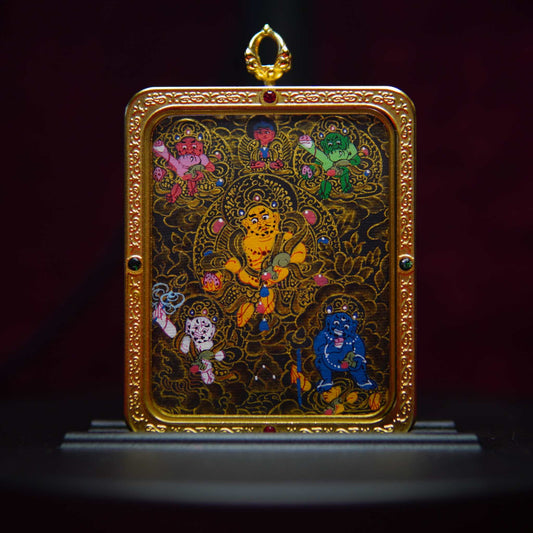
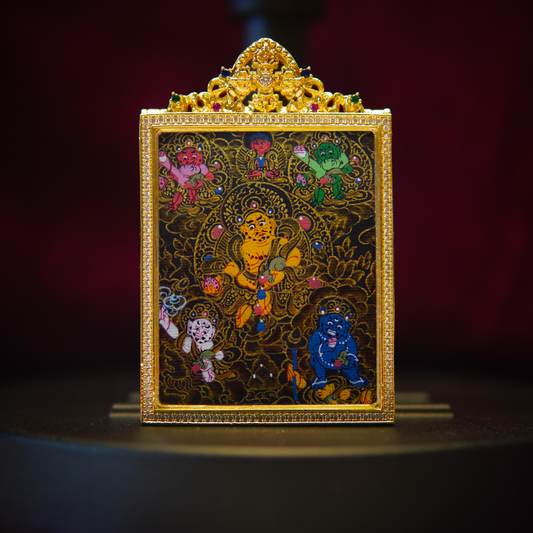
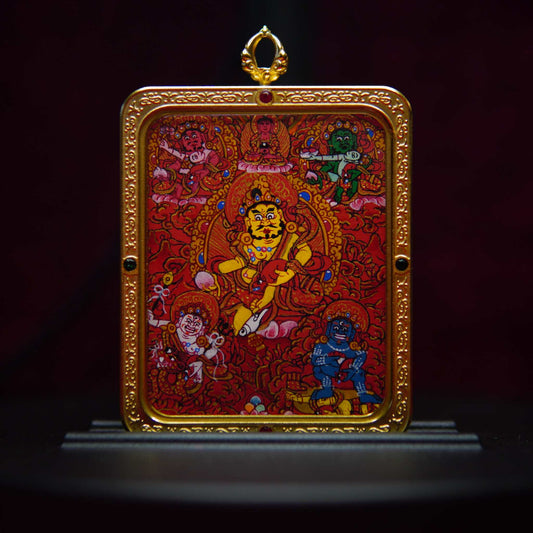
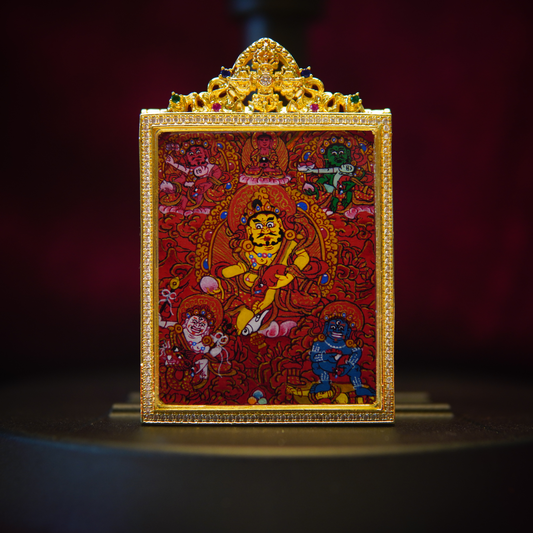
Jambhala.
Manjushri.
Medicine Buddha.
But turn the pendant over, and something unexpected appears.
A mysterious symbol.
A hand holding blooming lotus flowers.
Or, strangest of all—
a mongoose spilling treasure.
Why paint these images on the back?
Because in our double-sided Thangka pendants, the two sides have different roles:
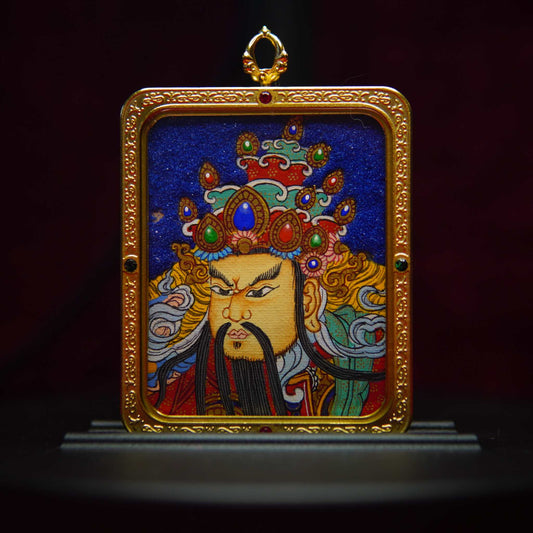
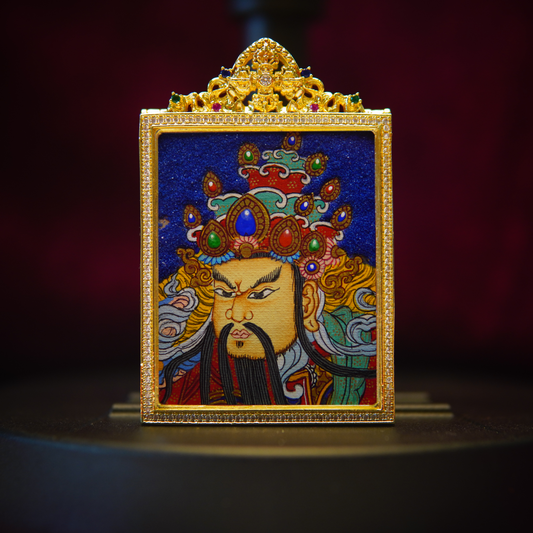
The front carries the Buddhist figure you choose.
The back carries an auspicious wish that accompanies it.
Let's look at the three reverse designs.

🔮 1. The Tenfold Powerful Symbol
The first design is the most mysterious.
Known as the Tenfold Powerful Symbol, or Namchu Wangden, this intricate emblem is associated with the Kalachakra tradition and appears in Tibetan Buddhist visual culture.
Its traditional meaning is complex, so it shouldn't simply be reduced to “a symbol for good luck.”
For this pendant design, we use it to express wishes for:
💡 Wisdom — clarity for the path ahead
🛡️ Protection — a wish for safety and steadiness
🌿 Smooth Progress — moving forward through obstacles
🕊️ Freedom — moving beyond what holds us back
Who might choose it?
Someone starting a new chapter, facing an important decision, moving somewhere new, or building something that requires courage and clarity.
A simple wish: May the road ahead be clear, protected, and open.
🪷 2. The Lotus-Bearing Hand
The second reverse design is gentler:
a hand holding blooming lotus flowers.
The lotus is one of the most recognizable symbols in Buddhist art and is widely associated with purity and awakening.
Its symbolism is easy to understand.
A lotus grows from muddy water—
yet blooms above it.
That's why it can serve as such a powerful reminder:
Where we come from does not have to determine what we become.
In this pendant design, the lotus imagery extends into wishes for:
❤️ Compassion — meeting others with kindness
🪷 Wisdom — growing through experience
♾️ Meaningful Connections — valuing the people we meet along the way
🏡 Family Harmony — a wish for closeness and understanding
Who might choose it?
Someone who values relationships, compassion, family, or personal growth.
It can also be a particularly meaningful choice for a partner, parent, family member, or close friend.
A simple wish: May you grow with wisdom and be surrounded by love.
🐾 3. The Treasure Mongoose
This is the design that usually raises the most questions.
Why is a mongoose spilling jewels?
Look closely at Tibetan Buddhist images of certain wealth figures such as Jambhala or Vaisravana, and you may notice a mongoose appearing alongside them—sometimes depicted disgorging jewels and treasure.
The Treasure Mongoose belongs to Buddhist wealth iconography and is visually associated with abundance.
But that doesn't mean:
“Wear this and you'll become rich.”
Buddhist wealth symbolism is more meaningful when abundance is considered alongside generosity and responsibility.
For this reverse design, the Treasure Mongoose expresses wishes for:
💰 Prosperity — sufficient resources and stability
⭐ Good Fortune — an auspicious path forward
📈 Steady Progress — growth built over time
🤝 Helpful Connections — meeting people who positively shape the journey

Who might choose it?
Entrepreneurs, business owners, professionals, or anyone beginning a new career or venture.
It also pairs naturally with Jambhala or Vaisravana imagery on the front.
A simple wish: May what you build grow — and may your abundance become something worth sharing.
✨ Which Reverse Design Should You Choose?
You don't need to choose the one that sounds “most powerful.”
Choose the wish that feels most relevant to your life right now.
| What You Want to Carry | Reverse Design |
|---|---|
| 🔮 Wisdom · Protection · Smooth Progress | Tenfold Powerful Symbol |
| 🪷 Compassion · Connection · Harmony | Lotus-Bearing Hand |
| 🐾 Prosperity · Opportunity · Abundance | Treasure Mongoose |
The reverse is intentionally simpler than the detailed deity painting on the front.
It isn't meant to compete with the main Thangka.
It completes it.
🪷 What About the Front?
The front is where your personal choice begins.
You might choose:
💚 Green Tara for compassion and courage
💛 Yellow Jambhala for prosperity and generosity
🧠 Manjushri for wisdom and clarity
🤍 White Tara for longevity and serenity
💙 Medicine Buddha for healing symbolism and compassion
🛡️ Mahakala for protection and overcoming obstacles
Not sure which Buddhist figure speaks to you?
→ Read our Guide to Choosing a Thangka by Meaning & Symbolism
Then return to choose the pendant that feels right for you.
🎁 Two Sides, One Personal Wish
This is also what makes a double-sided Thangka pendant meaningful as a gift.
For a graduate:
Manjushri + Tenfold Powerful Symbol
Wisdom for the decisions ahead. A smooth path forward.
For someone starting a business:
Yellow Jambhala + Treasure Mongoose
Prosperity, progress, and abundance.
For someone beginning a new chapter:
Green Tara + Lotus-Bearing Hand
Compassion, courage, and meaningful connections.
For a parent:
White Tara + Lotus-Bearing Hand
Serenity, longevity, and family harmony.
The combination doesn't have to promise anything supernatural.
Sometimes a meaningful gift simply says:
“This is what I wish for you.”
 🌿 The Front Carries the Figure. The Back Carries the Blessing.
Our double-sided hand-painted Tibetan Thangka pendants feature a detailed Buddhist figure on the front and a simpler hand-painted symbolic design on the reverse.
The two sides aren't meant to be identical.
They have different roles.
The front asks:
Which figure speaks to you?
The back asks:
What wish would you like to carry with it?
→ Explore Double-Sided Hand-Painted Thangka Pendants
The front carries the figure.
The back carries the blessing.
❓Quick Questions
What does the back of a Thangka pendant mean?
In this collection, the reverse features one of several hand-painted symbolic designs intended to express wishes such as wisdom, protection, harmony, or prosperity. The exact meaning depends on the selected design.
What is the Tenfold Powerful Symbol?
The Tenfold Powerful Symbol is associated with the Kalachakra tradition and appears in Tibetan Buddhist visual culture. Its traditional meaning is complex; in this collection, the design is used to express wishes for wisdom, protection, freedom, and smooth progress.
Why is a mongoose associated with wealth in Buddhist art?
A treasure or jewel-spitting mongoose appears in Buddhist wealth iconography, including depictions associated with Jambhala and Vaisravana. It is visually connected with treasure and abundance.