Why Does Ragaraja Transform Desire Instead of Rejecting It?
chenHenry🔥 Isn't Buddhism Supposed to Be About Getting Rid of Desire?
This is probably the most interesting question Ragaraja raises.
Ask someone unfamiliar with Buddhism what the religion teaches about desire and you may hear:
“Buddhism says desire is bad.”
Then show them Ragaraja.
His name is associated with passion and desire.
His body is red.
His face is fierce.
Flames surround him.
Nothing about the image looks emotionally neutral.
So why would such a figure exist in Buddhism at all?
The contradiction begins to disappear once we recognize two problems with the original question.
First, Buddhist teachings about desire are more nuanced than:
“Wanting anything is bad.”
Second, Esoteric Buddhism often emphasizes transformation, not simply suppression.
Ragaraja makes that idea impossible to ignore.
🪷 Is Desire Always Bad in Buddhism?
Not all forms of wanting are treated identically in Buddhist thought.
English makes this confusing because the word desire covers an enormous range of experiences.
Wanting another drink when you've already had too much is a desire.
Wanting to help someone is also a desire in ordinary English.
Wanting to understand Buddhist teachings is a desire.
Wanting another person so intensely that you cannot accept their independence is something very different.
Buddhist traditions use more precise concepts when discussing craving, attachment, aspiration and motivation.
So the popular statement:
“Buddhism teaches you to have no desires.”
is too crude.
The more important questions concern attachment, ignorance and the way desire conditions our actions.
This is the background that makes Ragaraja much more interesting.

🔥 What Makes Ragaraja Different?
Ragaraja is especially associated with the transformation of passion and desire within an Esoteric Buddhist framework.
The key word is:
transformation.
Not indulgence.
Not simply suppression.
Ragaraja should not be interpreted as saying:
“Desire whatever you want and Buddhism approves.”
Nor does his fierce imagery suggest that passion itself is automatically enlightened.
The religious idea is that powerful energies normally entangled with attachment can be approached within tantric practice in a radically different way.
For a general audience, the important distinction is simple:
transformation is not the same thing as giving desire permission to control you.
🔥 Why Is Ragaraja Surrounded by Fire?
Fire is one of the most appropriate images for transformation.
It changes what it touches.
Something enters a flame in one condition and does not remain exactly as it was.
That makes the fiery imagery surrounding Ragaraja particularly striking.
The flames intensify the wrathful composition, but they also fit naturally with the broader theme of transformation.
This is different from peaceful Buddhist imagery.
A Buddha sitting quietly on a lotus communicates one kind of religious atmosphere.
Ragaraja surrounded by flames communicates another.
The visual language says:
something powerful is happening here.
That doesn't mean every flame should be given a simplistic one-line “benefit.”
The composition works as a whole.
❤️ What Does Desire Have to Do With Love?
Almost everything.
Romantic love can involve genuine care and affection.
It can also involve:
attraction,longing,attachment,jealousy,fear of loss,sexual desire,
and the wish to be desired in return.
These experiences can overlap so closely that people sometimes struggle to tell them apart.
That is one reason Ragaraja's later association with love and relationships is so interesting.
He doesn't represent a sanitized version of love where nobody experiences difficult emotions.
His symbolism begins much closer to the intensity of desire and passion.
This makes the image more complicated than a heart symbol.
It also makes it more human.
🧠 Are Desire and Attachment the Same Thing?
Not exactly.
“Desire” is a broad English word.
Attachment implies a particular way of clinging—to a person, experience, identity or outcome.
You can want a relationship without believing another person belongs to you.
You can enjoy affection without demanding that it remain unchanged forever.
You can pursue a meaningful goal without making your entire identity depend on achieving it.
The distinctions become important because Buddhist practice is deeply concerned with how the mind relates to experience.
Ragaraja's symbolism shouldn't therefore be reduced to:
“Desire is good.”
The more interesting idea is:
What happens when desire is no longer approached blindly?
That question brings us back to transformation.
👹 Why Does Transformation Look Wrathful?
Because transformation isn't always visually gentle.
Ragaraja's fierce expression communicates intensity.
His multiple arms and ritual attributes create a sense of activity.
The flames make the entire scene feel unstable and alive.
This is characteristic of wrathful Buddhist visual language.
But wrathful does not mean:
evil.
Nor does it mean:
uncontrolled rage.
In Esoteric Buddhist imagery, a wrathful form can communicate powerful activity directed toward overcoming ignorance or transforming difficult conditions.
This is why Ragaraja can look frightening without contradicting his association with relationships and passion.
The subject isn't gentle romance.
The subject is what happens to powerful emotional energy.
🌿 What Can Ragaraja Mean Outside Formal Practice?
For Buddhist practitioners, Ragaraja belongs within specific religious traditions.
That context should not be replaced with modern self-help language.
But someone encountering Ragaraja through Buddhist art can still understand the central symbolic tension:
passion is powerful.
What matters is what happens to that power.
Does it become obsession?
Jealousy?
Possessiveness?
Compassion?
Creativity?
Commitment?
A symbolic object cannot make those decisions for us.
But it can represent the question.
That makes Ragaraja especially interesting for people drawn to imagery about emotional transformation rather than simple serenity.
📿 Why Choose a Ragaraja Thangka Pendant?
Once you understand Ragaraja this way, the product takes on a different character.
It isn't simply:
“a Buddhist necklace for attracting love.”
The fierce red image carries a much more unusual combination of ideas:
❤️ Connection
🔥 Passion
🪷 Transformation
✨ Relationships
For someone choosing the pendant for themselves, it may represent a period of emotional change or a desire to approach relationships with greater awareness.
As a gift, it can symbolize passion and connection without making promises about the future.
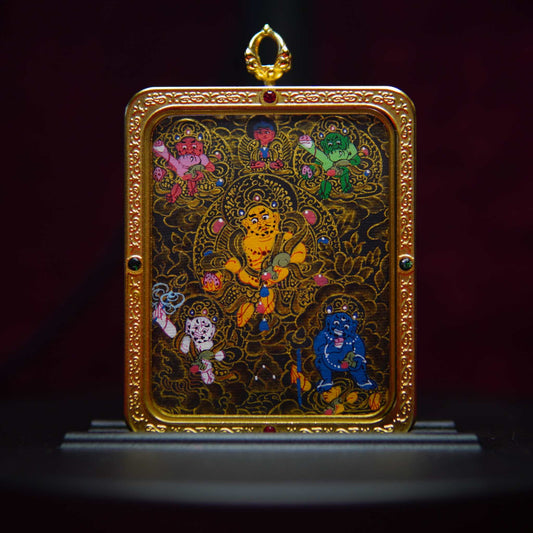
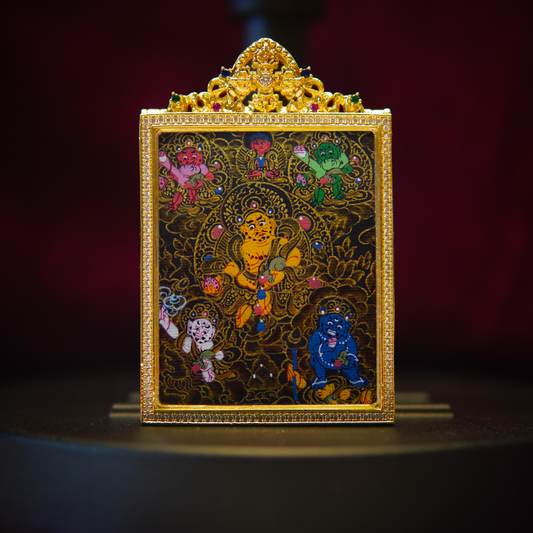
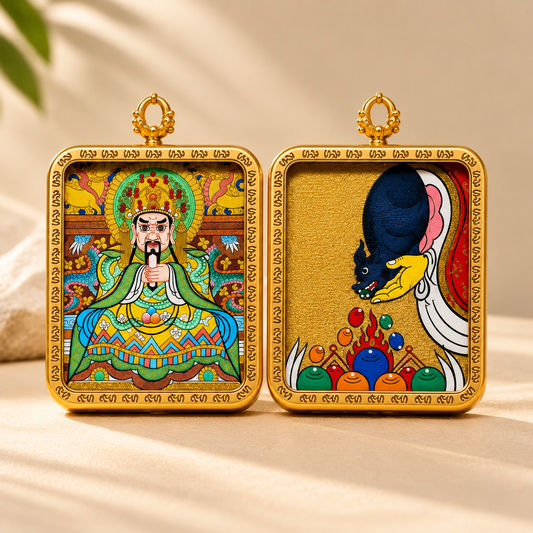
Our hand-painted Ragaraja Thangka pendant preserves the red wrathful figure, flames, multiple arms and intricate ritual imagery in miniature form.
Each piece is individually painted by hand, so subtle differences in linework and color are part of its handmade character.
→ Explore the Hand-Painted Ragaraja Thangka Pendant

And if you're wondering how this fierce figure became connected with romance in the first place:
→ Why Is Ragaraja, a Wrathful Buddhist Deity, Associated With Love?
❓Quick Questions About Ragaraja and Desire
Does Buddhism say all desire is bad?
That's an oversimplification. Buddhist traditions distinguish between different forms of craving, attachment, motivation and aspiration rather than treating every kind of wanting as identical.
What does Ragaraja represent?
Ragaraja is particularly associated with passion, desire and their transformation within Esoteric Buddhist tradition. He also became associated with attraction, affection and relationships in devotional culture.
Why is Ragaraja surrounded by flames?
The flames belong to his wrathful Buddhist iconography and fit naturally with themes of intense activity and transformation.
Does Ragaraja encourage desire?
It is more accurate to understand Ragaraja through transformation rather than indulgence. His symbolism should not be reduced to the idea that following every desire is spiritually beneficial.