White Jambhala vs White Mahakala: Why Are Both White and Associated With Wealth?
chenHenry🤍 Two White Buddhist Deities. Both Associated With Wealth. What's the Difference?
Two white Buddhist deities.
Both can look powerful.
Both are associated with prosperity.
And both are frequently described online using almost identical words:
wealth, abundance, prosperity, success.
So are White Jambhala and White Mahakala basically two versions of the same Buddhist wealth deity?
No.
They belong to different deity traditions and have different religious identities.
The confusion happens because modern product descriptions often compress both into the same phrase:
“Buddhist God of Wealth.”
A much better way to understand them is to stop asking:
“Which one is stronger for wealth?”
and start with:
Who are they?
 💰 Who Is White Jambhala?
White Jambhala is a form of Jambhala, the Buddhist wealth deity family associated broadly with prosperity, material support and the relief of hardship.
His identity begins with Jambhala.
That matters.
White Jambhala is not Mahakala painted white.
He belongs to a broader family that also includes Yellow, Red, Green and Black Jambhala forms.
These forms share prosperity-related themes but can emphasize different activities.
White Jambhala's symbolism can be understood through the relationship between:
prosperity,
pacifying activity,
and relief from difficult conditions.
👹 Who Is White Mahakala?
White Mahakala is a distinctive white form of Mahakala, a major wrathful protector in Tibetan Buddhism.
His identity begins with:
Mahakala.
That immediately separates him from Jambhala.
Mahakala is fundamentally known through protector traditions.
The White Mahakala form is particularly notable because prosperity and increasing or enriching activity become prominent alongside this protective identity.
So White Mahakala combines two ideas:
Prosperity + Protection
This is one reason he can appear confusingly similar to White Jambhala when both are reduced to a few marketing keywords.
💰 Why Are Both Associated With Wealth?
Because Tibetan Buddhist prosperity imagery is not limited to one deity.
Different figures can relate to resources and prosperity through different religious frameworks.
For White Jambhala, wealth belongs to the broader Jambhala prosperity tradition.
For White Mahakala, prosperity appears within a Mahakala protector tradition, with the white form associated with increasing or enriching activity.
So:
White Jambhala
Jambhala → Wealth / Material Support → Pacifying Dimension
White Mahakala
Mahakala → Protector → Increasing / Enriching Activity → Prosperity
The destination word may sometimes be the same:
prosperity.
The religious route is different.
🤍 Does White Mean the Same Thing for Both?
Not necessarily.
This is an important lesson for reading Buddhist art.
It is tempting to build a simple color dictionary:
white = wealth
yellow = money
red = love
green = success
black = protection
Buddhist iconography is not that simple.
Color has to be interpreted together with:
the deity,the specific form,the ritual tradition,the activity,and the surrounding iconography.
So White Jambhala and White Mahakala are not associated with prosperity simply because:
white means money.
Their meanings come from their respective traditions.
👹 Why Do Wealth-Associated Deities Look So Fierce?
This is one of the biggest surprises for people encountering Tibetan Buddhist art for the first time.
Western advertising often represents wealth through:
gold,luxury,smiling faces,coins,and abundance.
Tibetan Buddhist imagery can look completely different.
A deity associated with prosperity may still have:
fierce expressions,multiple arms,ritual implements,or other powerful imagery.
Why?
Because prosperity is only one dimension of the figure.
White Mahakala remains a protector.
White Jambhala remains part of a complex tantric Buddhist tradition.
The image doesn't exist merely to look like a modern “money god.”
🛡️ Which One Is More About Protection?
Protection is especially central to Mahakala's identity.
Mahakala is one of the major protector figures of Tibetan Buddhism, and the white form does not lose that protector character simply because prosperity becomes prominent.
White Jambhala can also appear within protective and supportive Buddhist contexts, but his broader identity begins with the Jambhala wealth tradition.
So if you are comparing the symbolism rather than trying to rank them:
White Mahakala → stronger protector identity
White Jambhala → stronger Jambhala wealth-deity identity
That is a difference in religious emphasis, not a statement that one is “more powerful.”
🌿 Which One Is More About Prosperity?
Both are genuinely associated with prosperity.
The difference is how that prosperity fits into their larger identities.
White Jambhala
Prosperity is central to his identity as a form of Jambhala.
White Mahakala
Prosperity and increasing activity exist alongside his strong identity as a wrathful protector.
This is why a person choosing between the two should not ask:
“Which one gives more money?”
A better question is:
Which symbolic framework am I actually drawn to?
📊 White Jambhala vs White Mahakala at a Glance
| White Jambhala | White Mahakala | |
|---|---|---|
| Deity Family | Jambhala | Mahakala |
| Broad Identity | Buddhist wealth deity | Wrathful Buddhist protector |
| Prosperity Association | Central to Jambhala tradition | Connected with increasing/enriching activity |
| Protection | Present in broader religious context | Major part of Mahakala identity |
| Color | White | White |
| Useful Core Idea | Prosperity + Pacifying/Supportive Activity | Prosperity + Protection |
| Same Deity? | No | No |
The table is only a starting point.
Exact iconography and interpretation depend on the particular form and tradition.
 🤔 Which Should You Choose: White Jambhala or White Mahakala?
There is no useful answer that says:
Choose X because X is stronger.
That turns Buddhist figures into competing financial tools.
A more meaningful approach is to understand the symbolism first.
White Jambhala may resonate if you are drawn to:
💰 Prosperity
🌿 Material Support
🤍 Pacifying Activity
🤲 Generosity
🪷 Relief from Hardship
White Mahakala may resonate if you are drawn to:
💰 Prosperity
🛡️ Protection
🔥 Overcoming Obstacles
🌿 Increasing Activity
⚡ Powerful Protector Imagery
Neither is automatically better.
They tell different stories.
💼 What About Business Owners?
Both figures can resonate with modern business owners, but for different symbolic reasons.
White Jambhala may appeal through the broader themes of:
resources,prosperity,support,and generosity.
White Mahakala may appeal through:
prosperity,protection,obstacle-removing symbolism,and the preservation of favorable conditions.
But neither should be marketed as:
“Wear this and your company will make more money.”
Their value is religious and symbolic, not a guarantee of commercial performance.
🎁 Which Makes the Better Gift?
Again, there isn't a universal winner.
Think about the message behind the gift.
If you want the symbolism to emphasize:
May you have sufficient resources, prosperity and supportive conditions
White Jambhala may be especially meaningful.
If you want the symbolism to emphasize:
May prosperity be accompanied by protection and strength through obstacles
White Mahakala may tell that story more naturally.
The best choice is the one whose symbolism matches the intention behind the gift.
🎨 Why Iconography Matters More Than Marketing Labels
If both products are described only as:
Buddhist Wealth Pendant
the customer loses almost everything interesting about them.
The figures become interchangeable.
But once you understand the iconography:
White Jambhala is White Jambhala.
White Mahakala is White Mahakala.
Their deity families, traditions, attributes and symbolic emphases differ.
That knowledge makes the artwork more valuable because the buyer understands what is actually being depicted.
📿 Two Different Ways of Thinking About Prosperity
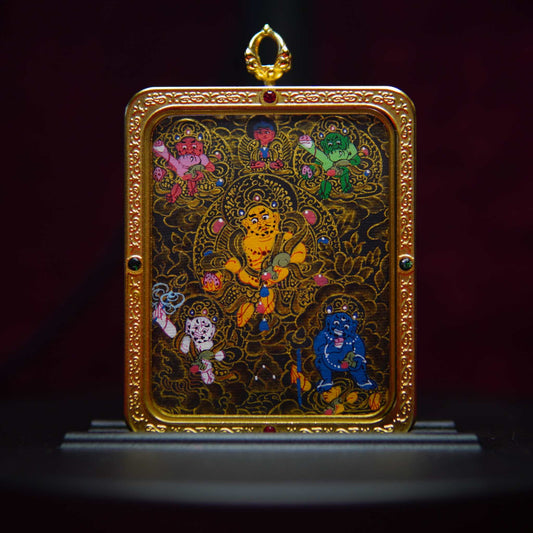
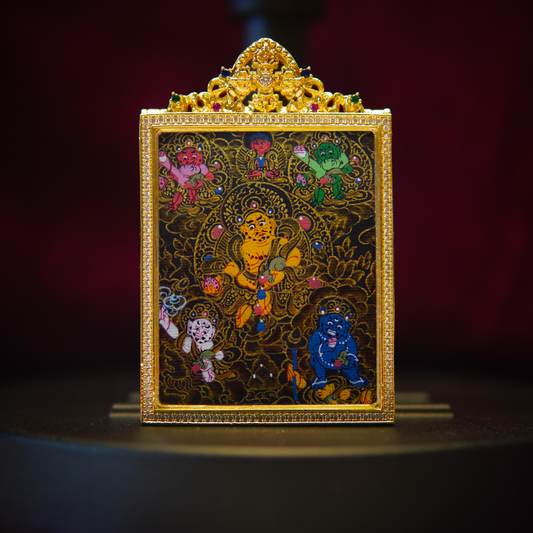
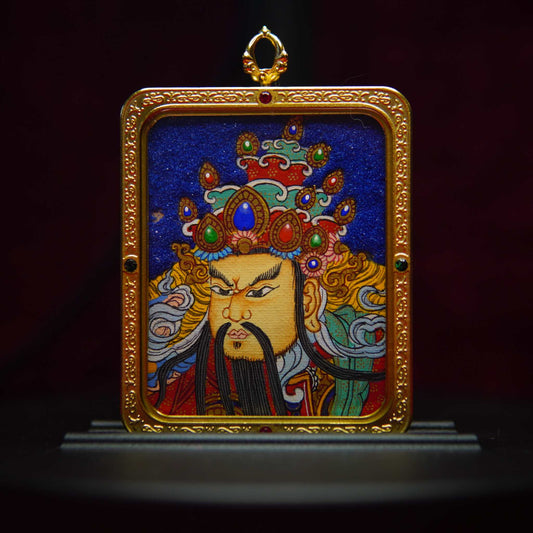
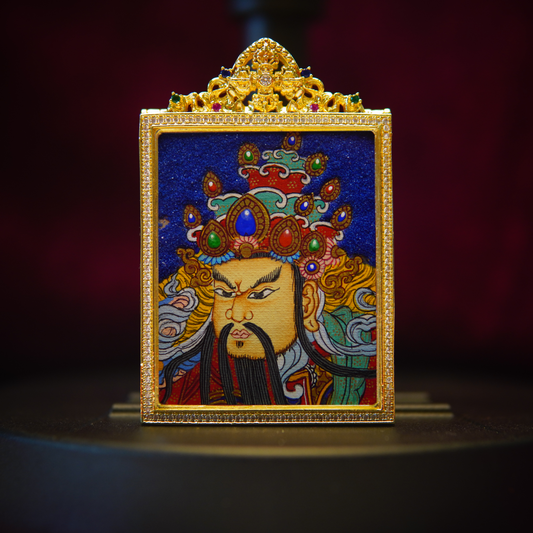
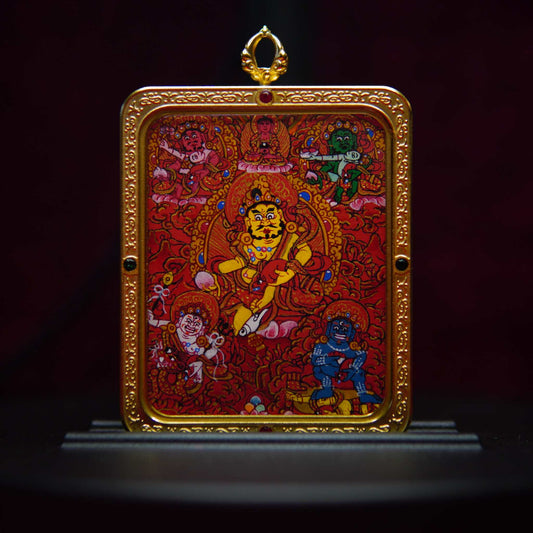
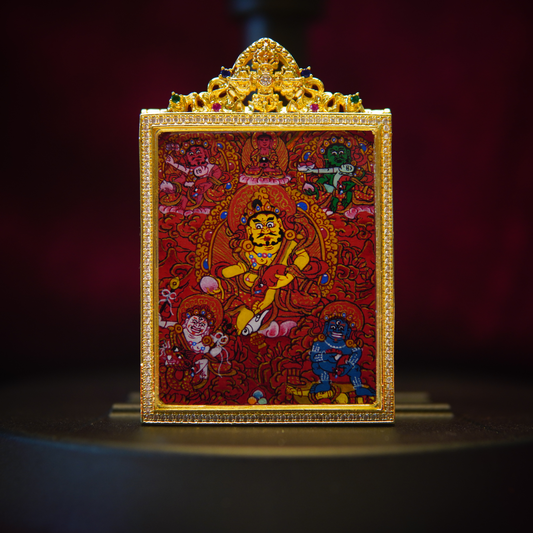
Our hand-painted White Jambhala Thangka pendant presents the white Jambhala form within richly detailed miniature Buddhist artwork.
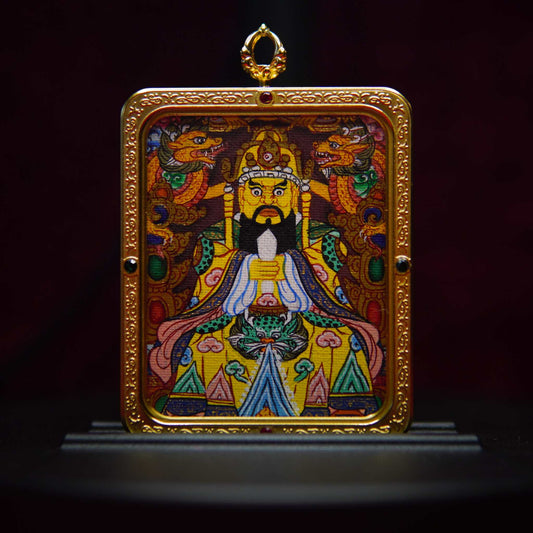
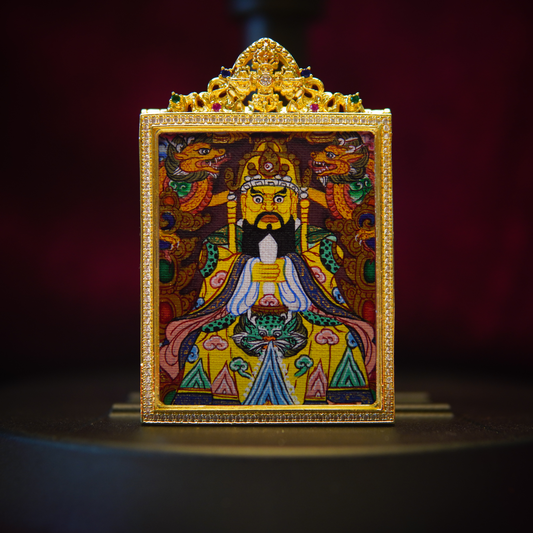
Our White Six-Armed Mahakala Thangka pendant presents a very different Buddhist identity: a wrathful protector whose white form is especially associated with prosperity and increasing activity.
Both are individually hand-painted miniature artworks, so subtle differences in expression, linework, color and surrounding details naturally occur.
The question isn't:
Which one is more powerful?
It is:
Which meaning speaks more clearly to what you want the piece to represent?
→ Explore the Hand-Painted White Jambhala Tibetan Thangka Pendant

→ Explore the Hand-Painted White Six-Armed Mahakala Thangka Pendant

And if you want to understand why White Jambhala is white in the first place:
→ Why Is White Jambhala White? The Meaning Behind Wealth, Compassion & Relief From Hardship
❓Quick Questions: White Jambhala vs White Mahakala
Are White Jambhala and White Mahakala the same deity?
No. White Jambhala belongs to the Jambhala deity family, while White Mahakala is a form of Mahakala, a major wrathful Buddhist protector.
Are both White Jambhala and White Mahakala associated with wealth?
Yes, but through different religious identities. Prosperity is central to the Jambhala tradition, while White Mahakala combines prosperity or increasing activity with Mahakala's strong protector identity.
Why are both deities white?
White has important meanings within Vajrayana Buddhist systems of activity and iconography, but it should not be interpreted through a universal formula. The specific deity and tradition matter.
Which is more associated with protection?
Protection is particularly central to Mahakala's broader identity as a Buddhist protector. White Jambhala belongs primarily to the Jambhala prosperity tradition.
Which is better for wealth?
It is more accurate to understand their different symbolism than to rank them. White Jambhala emphasizes the Jambhala prosperity tradition, while White Mahakala brings prosperity together with a strong protector identity.
Can either pendant guarantee financial success?
No. Both can carry devotional or symbolic significance, but neither should be presented as guaranteeing money, business success or financial outcomes.