Is Medicine Buddha Really About Physical Healing? What Bhaisajyaguru Represents
chenHenry🌿 What Exactly Is Medicine Buddha Supposed to “Heal”?
His English name creates an obvious expectation:
Medicine Buddha.
So does that mean Bhaiṣajyaguru is simply the Buddhist figure you turn to when you're physically sick?
Healing is certainly central to his tradition.
But stopping there misses much of the picture.
Buddhist teachings begin with a problem much larger than any one illness:
suffering.
Physical pain is part of suffering.
But so are fear, grief, confusion, aging, uncertainty and the inability to hold onto the things we love.
This is why Medicine Buddha imagery can speak simultaneously about illness, compassion, well-being and the Buddhist path.
So what exactly does “healing” mean when the healer is a Buddha?
 🪷 Who Is Bhaiṣajyaguru?
Bhaiṣajyaguru is the Sanskrit name of Medicine Buddha, a major Mahayana Buddhist figure associated with healing and the relief of suffering.
He became important across several Asian Buddhist traditions and is known by different names in different languages.
In Tibetan Buddhist art, he is particularly recognizable through his lapis-blue body, medicine bowl and medicinal imagery.
The Sanskrit name itself reinforces the connection with medicine and healing.
But Medicine Buddha should not be understood only through modern ideas of healthcare.
His religious meaning belongs to a Buddhist worldview in which physical illness exists within the much broader human problem of suffering.
🩺 Is Medicine Buddha Really Associated With Physical Illness?
Yes. Traditions surrounding Medicine Buddha genuinely include illness, healing and relief from physical suffering.
It would be inaccurate to remove physical health from the story simply because modern product marketing needs to avoid medical claims.
Medicine Buddha's association with healing is real within Buddhist religious tradition.
The important distinction is between:
religious healing tradition
and
medical efficacy claims about a product.
A Buddhist practitioner may pray, meditate or engage in Medicine Buddha practices in connection with illness.
That does not mean a commercial pendant can legitimately promise to cure disease.
Both statements can be true at the same time.
 🧠 What Does “Healing” Mean in Buddhism?
This is where Medicine Buddha becomes much more interesting.
Physical illness is one kind of suffering.
But Buddhism looks at suffering more broadly.
A perfectly healthy person can still experience:
fear,attachment,anger,grief,anxiety,confusion,and dissatisfaction.
The Buddhist path therefore does not define well-being only as:
“My body has no illness.”
Medicine Buddha's religious symbolism can be understood within this larger concern with the causes and experience of suffering.
This is why his image can feel meaningful even to someone who is not physically ill.
Healing becomes connected with:
compassion,
wisdom,
relief from suffering,
and conditions that support well-being and practice.
🥣 Why Does Medicine Buddha Hold a Medicine Bowl?
Because Buddhist art communicates through objects as well as faces.
The bowl in Medicine Buddha's lap is one of his clearest identifying attributes.
For a first-time viewer, it immediately makes the connection with medicine visible.
It also creates an interesting contrast.
Medicine Buddha sits peacefully.
There is no dramatic wrathful action.
No flames.
No terrifying expression.
Healing is represented through stillness.
The bowl rests calmly in his lap.
This makes Medicine Buddha visually very different from protectors such as Mahakala or Yamantaka, even though all of them can be connected in different ways with relief from harmful conditions.
🌿 What Plant Does Medicine Buddha Hold?
Medicine Buddha is commonly depicted with medicinal plant imagery, traditionally identified with myrobalan.
This is another detail that reinforces his relationship with healing.
To someone unfamiliar with the iconography, it may look like a small decorative plant.
Once you know what to look for, it becomes another identification clue.
This is one of the pleasures of learning to read Thangka art.
Tiny details stop being random.
They begin telling you who the figure is and what religious tradition the painting is expressing.
 💙 Why Is Medicine Buddha Blue?
His distinctive blue body is connected with lapis lazuli radiance.
The color is so important that it deserves its own explanation.
But it is worth emphasizing one point here:
Medicine Buddha is not blue simply because modern color psychology says blue is calming.
The lapis association belongs to a much older Buddhist religious context.
→ Why Is Medicine Buddha Blue? The Meaning Behind His Lapis Lazuli Color
That story helps explain why Bhaiṣajyaguru is one of the easiest Buddhas to recognize visually.
🙏 Can Wearing a Medicine Buddha Pendant Heal an Illness?
A Medicine Buddha pendant should not be treated as medical treatment or as a guarantee of recovery.
This does not mean the pendant has no meaning.
For a Buddhist practitioner, the image may serve as a devotional object or reminder of Medicine Buddha practice.
For someone else, it may represent:
hope,
compassion,
support,
meditation,
or a wish for well-being.
But if someone has a medical condition, the appropriate response is medical care—not replacing treatment with jewelry.
Keeping that distinction clear allows the traditional healing symbolism to remain meaningful without making claims the object cannot responsibly support.
🎁 Is a Medicine Buddha Pendant a Good Gift for Someone Who Is Ill?
It can be—if it is given as a symbol of compassion and support rather than as a promise of healing.
This is actually one of the most natural contexts for Medicine Buddha imagery.
Someone may be:
recovering from illness,
going through treatment,
caring for a family member,
experiencing a difficult period,
or simply in need of encouragement.
A Medicine Buddha pendant can communicate:
“I am thinking of your well-being.”
That is very different from saying:
“This will cure you.”
The first is a meaningful gesture.
The second is a medical claim.
For a gift, that difference matters.
🌿 Is Medicine Buddha Only for Sick People?
No.
The figure's association with healing can resonate much more broadly.
Medicine Buddha may be meaningful for:
🧘 Meditators — as a focus for reflection and Buddhist practice
🩺 Caregivers — as a symbol of compassion toward those experiencing suffering
🌿 Wellness Professionals — when approached respectfully as Buddhist imagery rather than a medical guarantee
🙏 Buddhist Practitioners — through specific devotional traditions
💙 Someone Moving Through a Difficult Period — as a symbolic reminder of compassion, hope and well-being
This is one reason Medicine Buddha remains so recognizable.
Illness is universal.
But so is the desire for relief from suffering.
 🪷 Healing vs. Cure: Why the Difference Matters
The words healing and cure are often used as though they mean the same thing.
For a Medicine Buddha product page, it is useful to keep them separate.
A cure is a medical outcome.
Healing can be used more broadly in religious, emotional and spiritual language.
Someone may continue living with an illness while also finding:
greater peace,acceptance,support,meaning,or compassion.
That doesn't make the disease disappear.
But it explains why healing symbolism can remain meaningful even when medicine cannot promise a particular outcome.
Medicine Buddha belongs naturally in that broader human conversation about suffering and care.
📿 Medicine Buddha in Miniature Thangka Art
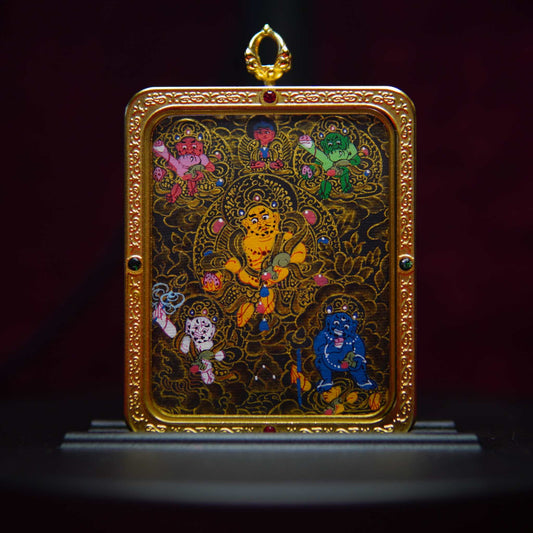
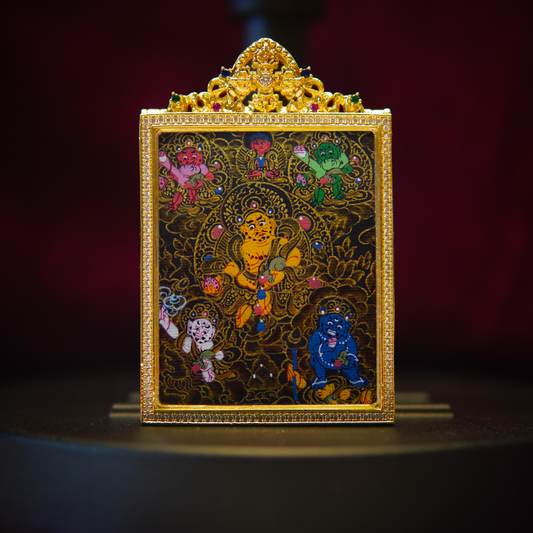
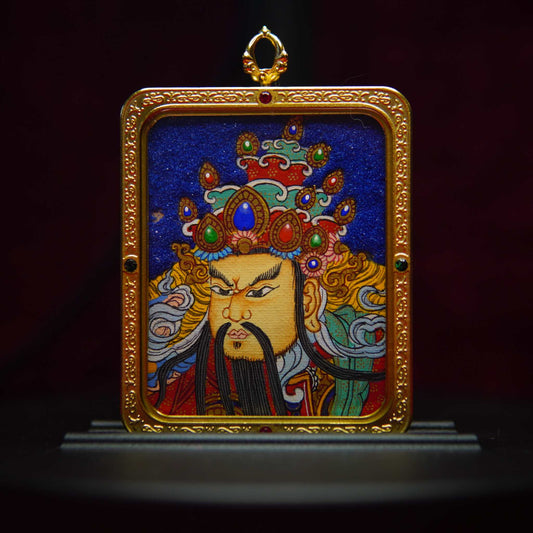
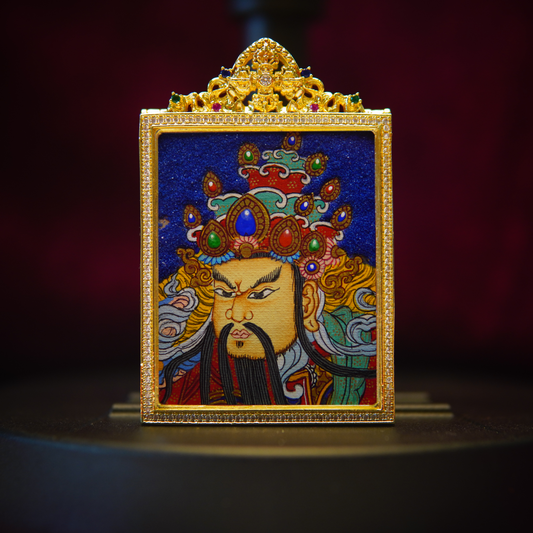
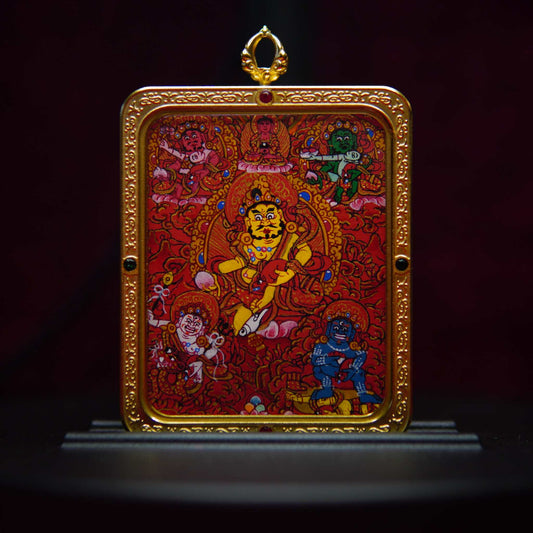
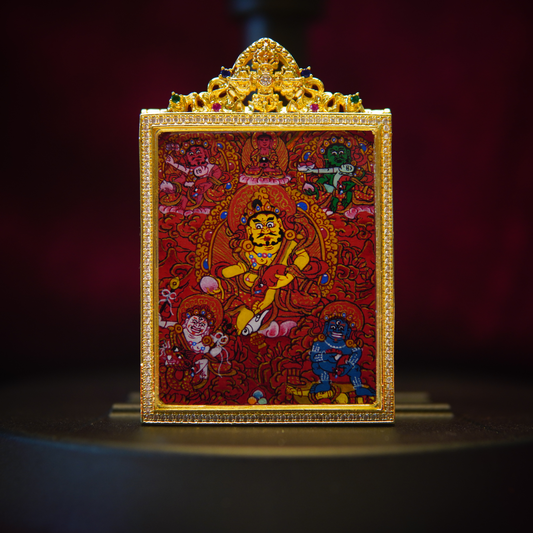
Our hand-painted Medicine Buddha Tibetan Thangka pendant portrays Bhaiṣajyaguru in his recognizable blue form, surrounded by traditional Buddhist imagery.
Depending on the individual design, details may include lotus flowers, a medicine bowl, medicinal symbolism, sacred landscapes, halos and surrounding figures.
Because each miniature Thangka is individually painted by hand, no two pieces are perfectly identical.
For practitioners, the pendant may carry devotional meaning.
For others, it can serve as a small symbol of:
🌿 Healing
💙 Well-Being
🪷 Compassion
🧘 Peace
✨ Hope
→ Explore the Hand-Painted Medicine Buddha Thangka Pendant

❓Quick Questions About Medicine Buddha and Healing
What does Medicine Buddha represent?
Medicine Buddha, or Bhaiṣajyaguru, is traditionally associated with healing, relief from suffering, compassion and well-being in Mahayana Buddhist traditions.
Is Medicine Buddha only for physical healing?
No. Physical illness is genuinely part of Medicine Buddha traditions, but his Buddhist significance can also be understood within the broader context of suffering and well-being.
Can a Medicine Buddha pendant cure illness?
No medical outcome should be promised from wearing a pendant. It can have devotional or symbolic significance but should not replace medical treatment.
What is Medicine Buddha's Sanskrit name?
His Sanskrit name is Bhaiṣajyaguru.
Why is Medicine Buddha blue?
His blue body is traditionally associated with lapis lazuli radiance, one of the most recognizable elements of his Buddhist iconography.