Why Do Tibetan Buddhist Monks Wear Yellow Hats?
chenHenry🟡 Why the Yellow Hat?
Think of a Buddhist monk and you probably imagine robes in shades of saffron, burgundy or maroon.
Then you encounter Tibetan Buddhist art.
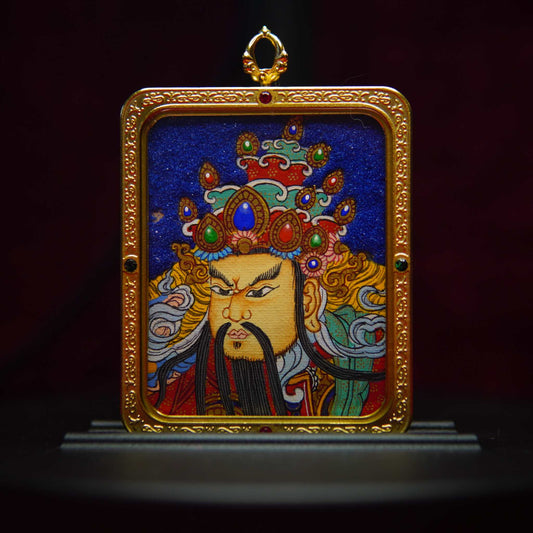
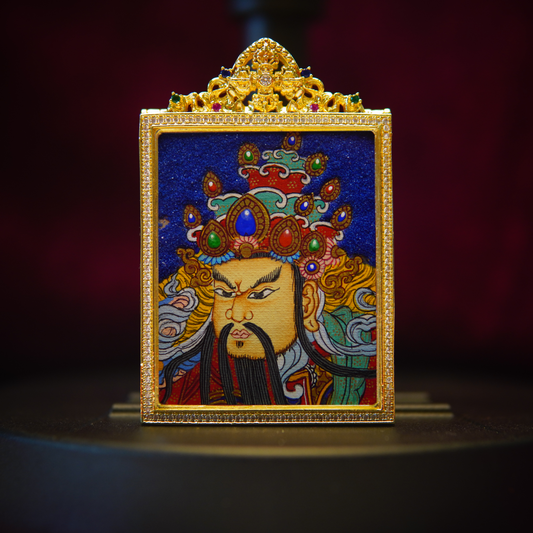
One figure appears again and again wearing an enormous, unmistakable yellow hat.
That figure is often Je Tsongkhapa.
The hat became so closely associated with the Buddhist tradition connected with him that the Gelug school is frequently called the “Yellow Hat” school in Western writing.
But that creates a few obvious questions.
Why yellow?
Is it simply symbolic?
Does every Tibetan Buddhist monk wear one?
And why did a scholar's hat become one of the easiest ways to recognize Tsongkhapa in a Thangka?

🪷 Who Was Je Tsongkhapa?
Je Tsongkhapa (1357–1419) was a major Tibetan Buddhist scholar, teacher and founder of the Gelug tradition.
He devoted much of his life to Buddhist study, philosophical analysis, teaching and disciplined practice.
His influence continued through the monastic institutions and teaching traditions that developed around his followers.
The Gelug school eventually became one of the major traditions of Tibetan Buddhism.
The Dalai Lama lineage is historically associated with Gelug, which helped make the tradition especially visible internationally.
For many Western audiences, this visibility also made the phrase “Yellow Hat school” one of the first labels encountered when learning about Tibetan Buddhism.
But the phrase can be misleading if taken too literally.
🟡 Does Every Tibetan Buddhist Monk Wear a Yellow Hat?
No.
Tibetan Buddhism includes several major traditions, including:
Nyingma,Kagyu,Sakya,Gelug
as well as other lineages and sub-traditions.
Their ritual clothing, hats and visual traditions differ.
Even within Gelug, monks do not simply walk around wearing yellow ceremonial hats all day.
Different hats and garments are used in particular ritual, scholastic and ceremonial contexts.
So:
Tibetan Buddhist monk = yellow hat
is not an accurate equation.
The yellow hat is particularly recognizable because of its association with Gelug monastic identity and scholarship.
🎓 Why Does Tsongkhapa Wear a Yellow Scholar’s Hat?
The tall yellow hat seen in Tsongkhapa imagery belongs to Tibetan Buddhist monastic and scholastic culture.
This is an important distinction because it is tempting to invent a generic color explanation:
Yellow means wealth.
Yellow means sunlight.
Yellow attracts good fortune.
Those explanations may sound convenient on a product page, but they miss the point.
Tsongkhapa's yellow hat is better understood through religious identity, monastic scholarship and the visual traditions associated with Gelug.
It tells the viewer that the figure is not simply a generic monk.
Combined with his other attributes, the hat helps identify him specifically as Je Tsongkhapa.

🏔️ Why Is Gelug Called the “Yellow Hat School”?
“Yellow Hat” became a convenient Western shorthand for the Gelug school of Tibetan Buddhism, distinguishing it visually from traditions sometimes described using labels such as “Red Hat.”
But Gelug itself is the proper name of the tradition.
The school developed from the teachings and reforms associated with Tsongkhapa and his disciples, with a particularly strong emphasis on monastic discipline, philosophical study and systematic Buddhist education.
This scholarly emphasis fits the way Tsongkhapa is represented in art.
He isn't normally portrayed as a king or warrior.
He appears as a monk.
A scholar.
A teacher.
The yellow hat became one of the visual signals of that identity.
👀 How Can You Recognize Tsongkhapa?
The hat is the easiest place to start.
But don't stop there.
A traditional Tsongkhapa Thangka often includes several clues:
🟡 Yellow Scholar's Hat
🙏 Teaching Gesture
🧘 Monastic Robes
🪷 Lotus Blossoms
⚔️ Sword of Wisdom
📖 Buddhist Scripture
The last two are especially interesting.
A sword beside a peaceful monk seems strange until you understand its connection with Manjushri, the bodhisattva of wisdom.
It isn't a weapon of violence.
It is the Sword of Wisdom.
And the book beside it carries another layer of meaning connected with Buddhist wisdom and learning.
→ Why Are a Sword and a Book Floating Beside Tsongkhapa?
Once you understand those symbols, the yellow hat becomes only one part of a much larger visual language.
📚 Why Is Learning So Central to Tsongkhapa?
This is where Tsongkhapa differs from the generic “spiritual master” description sometimes used in commercial listings.
His historical and religious importance is deeply connected with study.
Philosophy.
Debate.
Scriptural interpretation.
Monastic discipline.
Meditation.
Teaching.
In Tsongkhapa's tradition, study and spiritual practice are not necessarily competing approaches.
Learning can support meditation.
Philosophical understanding can help clarify practice.
Discipline provides structure.
This is why a Tsongkhapa image can feel particularly appropriate for someone committed to serious learning.
Not because the image magically makes someone smarter.
But because the person depicted spent his life within a tradition that placed enormous value on understanding.
🎁 Why Tsongkhapa Can Be a Meaningful Gift
This makes Tsongkhapa particularly interesting for a few specific occasions.
🎓 Graduation
A symbol connected with learning and the transition from one stage of education to another.
📚 Beginning a New Field of Study
For someone entering university, graduate school or serious Buddhist study.
🧘 Buddhist Practice
For practitioners drawn to the Gelug tradition or to Tsongkhapa's teachings.
👨🏫 Teachers & Scholars
A meaningful image for someone whose life involves learning and passing knowledge to others.
The symbolism is much more specific than simply giving someone a generic “good luck” pendant.
It says something about what you value in that person.
🎨 Why the Yellow Hat Matters in a Miniature Thangka
On a large Thangka, Tsongkhapa's hat is impossible to miss.
On a pendant only a few centimeters across, the same detail becomes miniature.
That changes the way you look at the artwork.
The outline of the hat.
The monastic robes.
The teaching gesture.
The lotus blossoms.
The tiny sword and scripture.
All have to exist within a remarkably small painted space.
Our hand-painted Je Tsongkhapa Thangka pendant preserves these recognizable elements in wearable form, with each piece individually painted rather than mechanically printed.
That means subtle differences between pieces are part of the handmade process.
🪷 From Yellow Hat to a Much Bigger Story
At first, the yellow hat seems like a simple visual curiosity.
Why is that monk wearing such an unusual hat?
But follow the question far enough and it opens into something much larger:
Tsongkhapa.
Gelug.
Tibetan monastic education.
Buddhist philosophy.
Manjushri.
The Sword of Wisdom.
Scripture.
Teaching.
This is one of the things that makes Thangka art interesting.
A small visual detail can carry an entire network of history and meaning.
→ Explore the Hand-Painted Je Tsongkhapa Thangka Pendant

❓Quick Questions
Why do Tibetan Buddhist monks wear yellow hats?
Yellow ceremonial hats are particularly associated with the Gelug tradition and its monastic and scholastic identity. Not all Tibetan Buddhist monks belong to Gelug or wear yellow hats.
What is the Yellow Hat school of Tibetan Buddhism?
“Yellow Hat school” is a common Western nickname for the Gelug school, the Tibetan Buddhist tradition founded by Je Tsongkhapa.
Why does Tsongkhapa wear a yellow hat?
The yellow scholar's hat reflects his monastic and scholastic identity and became one of the most recognizable visual markers associated with Tsongkhapa and Gelug tradition.
Was Tsongkhapa the founder of Gelug?
Yes. Je Tsongkhapa is regarded as the founder of the Gelug school of Tibetan Buddhism, with the tradition developing further through his disciples and monastic institutions.