Why Is Yamantaka Called the “Conqueror of Death”?
chenHenry💀 “Conqueror of Death” Sounds Like an Impossible Promise
Everyone dies.
Buddhist teachers knew that as well as anyone.
Impermanence and mortality are central concerns throughout Buddhist thought.
So why would one of Tibetan Buddhism's fiercest tantric deities carry a name commonly interpreted as the “Conqueror of Death” or “Destroyer of Death”?
Does Yamantaka defeat death?
Does he promise immortality?
And what does the terrifying buffalo-headed figure have to do with any of this?
The answer is much more interesting than “wear this and live forever.”
To understand Yamantaka, we first have to meet the figure whose name is hidden inside his own:
Yama — the Lord of Death.
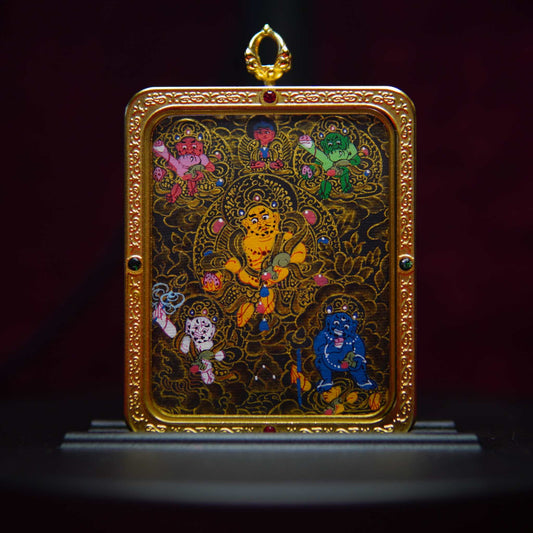
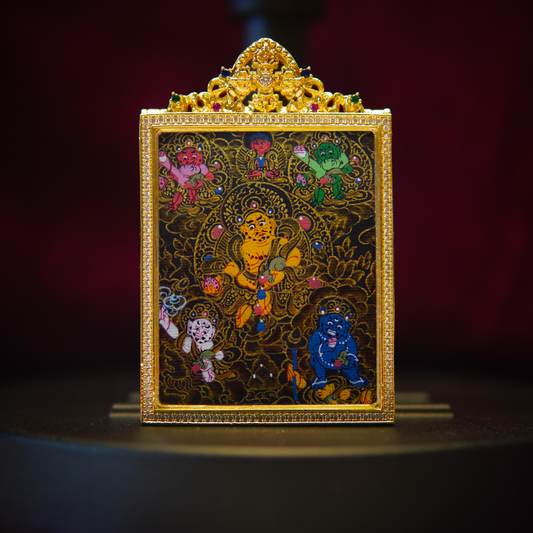
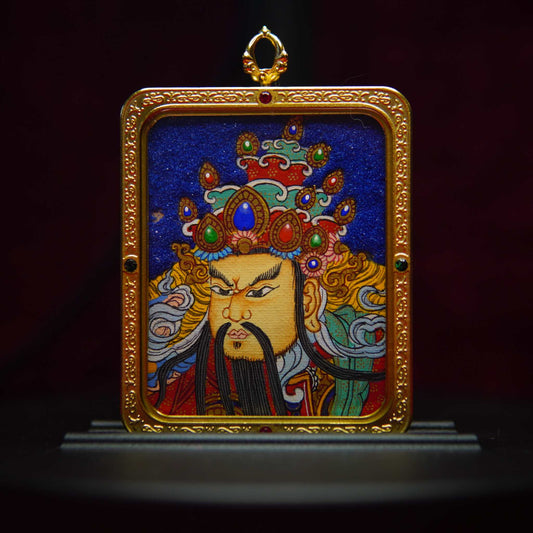
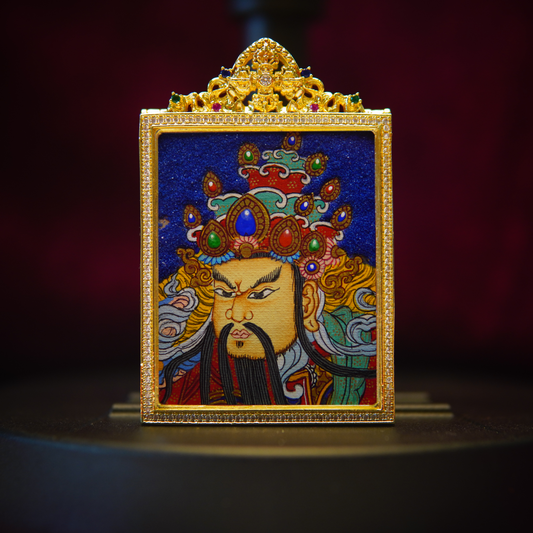
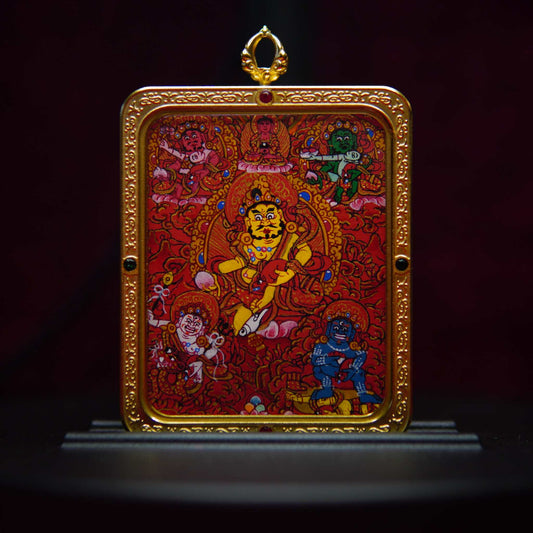
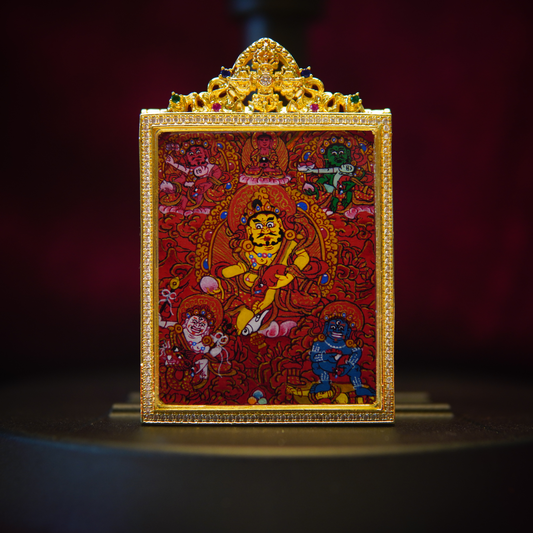
Hand-Painted Yamantaka (Vajrabhairava) Thangka Pendant

💀 What Does “Yamantaka” Mean?
Yamantaka is commonly interpreted as the “Destroyer of Yama” or “Conqueror of Death.”
Yama is a figure associated with death and mortality across several South Asian religious traditions and also appears within Buddhist cosmology and art.
Yamantaka's name therefore immediately establishes a confrontation:
Yama → Death
Yamantaka → Conquest of Yama
But this is where literal interpretation becomes misleading.
“Conquering death” in Buddhist symbolism should not be reduced to keeping the physical body alive forever.
Buddhism begins from the recognition that conditioned existence is impermanent.
The deeper question is not:
How can I make sure I never die?
It is:
What does wisdom change about our relationship with death?
👹 Who Is Yama, the Lord of Death?
Yama is traditionally associated with death and the judgment or realm of the dead in several Asian religious traditions.
In Buddhist art, he can appear in fierce forms and is often associated with buffalo imagery.
This makes the buffalo-headed appearance of Yamantaka especially meaningful.
The visual relationship isn't accidental.
Yamantaka confronts death in a form that echoes the imagery of death itself.
For someone unfamiliar with the tradition, the buffalo head may simply look like another frightening detail.
Once you know the Yama connection, the image becomes much easier to read.
The animal head is part of the story told by the Thangka.
🐃 Why Does Yamantaka Have a Buffalo Head?
The buffalo is closely associated with Yama.
So when Vajrabhairava appears with a massive buffalo head, the image creates a deliberate relationship with the Lord of Death.
This is one of the reasons the iconography is so powerful.
Yamantaka doesn't appear as a gentle figure standing safely away from mortality.
He meets the imagery of death directly.
The visual language is confrontational.
That is entirely appropriate for a wrathful tantric deity.
It also helps explain why simply describing the buffalo as a symbol of “strength” misses the deeper point.
Strength may be part of the visual impression.
But the more important relationship is:
Buffalo → Yama → Death → Yamantaka
Once that relationship is understood, one of the strangest details in the painting suddenly has context.
🧠 What Does Manjushri Have to Do With Death?
This is where Yamantaka becomes especially interesting.
Yamantaka is closely associated with Manjushri, the bodhisattva of wisdom.
At first, that seems strange.
What does wisdom have to do with a terrifying buffalo-headed conqueror of death?
Quite a lot.
Buddhist teachings repeatedly connect suffering with ignorance—our misunderstanding of reality, attachment to what changes, and resistance to impermanence.
Death is frightening partly because it confronts us with something we cannot control.
A wrathful form associated with Manjushri places wisdom at the center of that confrontation.
Yamantaka therefore isn't interesting because he offers a fantasy in which the body never dies.
The symbolism asks a harder question:
Can wisdom transform the fear created by mortality?
That is very different from physical immortality.
🔥 Why Does “Conquering Death” Matter in Buddhism?
Buddhist traditions do not treat death as a distant problem.
Contemplating impermanence is an important part of practice precisely because everything changes.
Bodies age.
Relationships change.
Possessions disappear.
Circumstances end.
Death is the most unavoidable expression of that impermanence.
Trying never to think about it doesn't make it disappear.
Yamantaka's imagery takes the opposite approach.
Nothing about the figure looks like avoidance.
The flames, buffalo head, multiple arms and wrathful expression create a direct encounter with something frightening.
This is one reason the deity can feel so visually intense.
The Thangka does not make mortality pretty.
It makes the confrontation impossible to miss.
⚡ Does Yamantaka Destroy the Fear of Death?
It would be too simplistic to say:
“Pray to Yamantaka and you'll never fear death.”
Religious practice doesn't work like an advertising claim.
Within Buddhist contexts, Yamantaka belongs to sophisticated tantric traditions that require proper teaching and initiation.
But for someone studying the symbolism through art, the connection between wisdom and fear is still understandable.
Fear often grows where we cannot accept uncertainty.
Wisdom does not necessarily remove the event we fear.
It can change how we understand it.
This is one reason the Manjushri connection matters so much.
Yamantaka's terrifying form is not separated from wisdom.
It is interpreted through wisdom.
Hand-Painted Yamantaka (Vajrabhairava) Thangka Pendant

🛡️ Why Is Yamantaka Associated With Protection and Obstacles?
Yamantaka's wrathful activity also explains why he is frequently associated with protection and the overcoming of obstacles.
The imagery communicates force.
But again, this should not be translated into:
“Wear Yamantaka and no bad thing can happen.”
Traditional Buddhist practice is more complex than that.
For someone approaching the figure through art and symbolism, protection can instead be understood through the qualities expressed by the image:
fearlessness, determination, vigilance and the willingness to confront difficult conditions.
This makes Yamantaka very different from peaceful figures associated primarily with compassion, learning or serenity.
🎨 How to Read a Yamantaka Thangka
The next time you look at a Yamantaka or Vajrabhairava Thangka, don't begin by asking:
Why is this so scary?
Try asking what each major visual feature is doing.
🐃 Buffalo Head — connects the imagery with Yama and death
🔥 Flames — reinforce wrathful, transformative activity
👹 Fierce Expression — communicates uncompromising force rather than peaceful contemplation
👐 Multiple Arms — express expanded activity within complex tantric iconography
⚔️ Ritual Implements — belong to specific iconographic traditions and should be interpreted according to the actual form depicted
🧠 Manjushri Connection — places wisdom behind the wrathful appearance
You don't have to memorize every detail.
Simply knowing these relationships already changes the way the painting looks.
📿 Why Carry a Yamantaka Thangka?
Yamantaka is not the obvious choice for someone looking for a gentle Buddhist image.
That's part of what makes him distinctive.
Our hand-painted Yamantaka (Vajrabhairava) Thangka pendant preserves the fierce buffalo-headed form, flames, multiple arms and intricate ritual imagery within a miniature painting designed to be carried.
For practitioners, the deity belongs to specific Vajrayana traditions.
For others drawn to Tibetan Buddhist art, Yamantaka can represent themes that are difficult to express with a peaceful image:
courage in the face of fear, wisdom in the face of ignorance, and determination in the face of obstacles.
Each miniature Thangka is individually painted by hand, so subtle variations in linework, color and fine detail are natural.
→ Explore the Hand-Painted Yamantaka (Vajrabhairava) Thangka Pendant

And if you're still wondering how this terrifying figure can possibly be connected with peaceful Manjushri:
→ The Surprising Connection Between Manjushri and Yamantaka
❓Quick Questions
Why is Yamantaka called the Conqueror of Death?
The name Yamantaka is commonly interpreted in relation to the conquest or destruction of Yama, the Lord of Death. The symbolism does not simply mean physical immortality; it belongs to a deeper Buddhist context involving mortality, ignorance and wisdom.
Does Yamantaka make you immortal?
No. Yamantaka should not be understood as promising physical immortality. Buddhist traditions emphasize impermanence rather than denying death.