Why Is a Dragon King Worshipped on One of China’s Holiest Buddhist Mountains?
chenHenry🐉 A Dragon King on a Buddhist Sacred Mountain?
Mount Wutai is one of China's most celebrated Buddhist sacred mountains, traditionally associated with Manjushri, the bodhisattva of wisdom.
Yet one of the mountain's most popular places of devotion centers on someone very different.
Not another Buddha.
Not another bodhisattva.
A Dragon King.
People call him Wuye (五爷) — the Fifth Lord.
Business owners visit him. Families visit him. Travelers bring prayers and wishes.
Some hope for prosperity. Some ask for protection. Others simply carry a wish they have held quietly for years.
So who exactly is Wuye?
And how did a Dragon King become such a beloved figure on one of China's holiest Buddhist mountains?

🪷 Who Is Wuye?
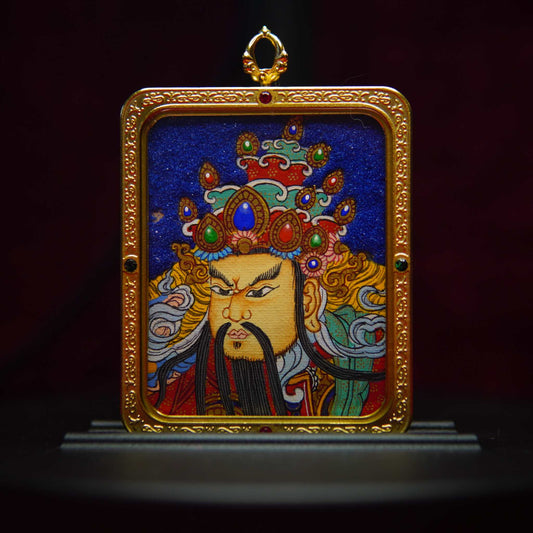
Wuye, literally “Fifth Lord,” is the popular name associated with the Guangji Dragon King worshipped at Mount Wutai in Shanxi, China.
In local tradition, Wuye is often described as the fifth son of a Dragon King, which explains the affectionate title “Fifth Lord.”
His story belongs to a fascinating meeting point between several traditions:
🐉 Chinese Dragon King beliefs
🪷 Buddhist sacred culture
🏔️ Mount Wutai local tradition
🙏 Popular devotional practice
This distinction is important.
Wuye should not simply be described as “a Buddha” or reduced to a generic “wealth god.”
He is a guardian figure whose popularity developed within the unique religious and cultural world surrounding Mount Wutai.
That is also what makes him so unusual.
🏔️ Why Is a Dragon King at Mount Wutai?
Local legend provides a colorful explanation.
According to popular stories, Mount Wutai was once unbearably hot. Manjushri obtained a miraculous cooling stone associated with the Dragon King's realm, transforming the region into the cool mountain landscape for which it became known.
The Dragon King's sons eventually came searching for it.
After conflict, Manjushri subdued them, and the Fifth Dragon King became associated with Mount Wutai, its rainfall, and the protection of the surrounding region.
This is religious folklore rather than historical biography, but the story reveals something important about Chinese sacred culture.
Buddhist traditions did not always exist separately from older local beliefs.
Stories about mountains, rain, water spirits, Dragon Kings, Buddhist bodhisattvas, and local guardians could meet and develop together.
Wuye is a vivid example of that cultural blending.

🙏 Why Did Wuye Become So Popular?
Wuye's appeal is unusually close to everyday life.
Devotees commonly approach him with wishes concerning:
💰 Prosperity & Livelihood
🛡️ Protection & Safety
🌿 Favorable Conditions
🙏 Personal Aspirations
🚶 A Smooth Path Forward
These aren't abstract concerns.
They're the questions people still worry about today:
Will my business survive?
Will this opportunity work out?
Will my family be safe?
Will the journey go smoothly?
Will the thing I have spent years building finally move forward?
This helps explain why Wuye developed such a strong popular following.
His symbolism speaks to the uncertainty of ordinary life.
🎭 Why Is There an Opera Stage Facing Wuye?
Here's where the story gets even stranger.
At Wuye Temple, a traditional opera stage faces the Dragon King Hall.
Why would a temple need a theater facing a Dragon King?
According to local tradition:
Wuye loves watching opera.
Performances have long been associated with honoring Wuye, particularly during festivals and as expressions of gratitude.
The image is remarkable:
A Dragon King.
On a Buddhist sacred mountain.
With an opera stage facing his hall.
This small detail tells us something important about Wuye.
His tradition isn't only theological.
It is alive with local folklore, festivals, gratitude, performance, and everyday human relationships with the sacred.
That's why simply calling Wuye a “wealth god” misses much of what makes him fascinating.
💰 Is Wuye Really a God of Wealth?
Wuye is strongly associated in popular devotion with prosperity, business, livelihood, and successful wishes.
But describing him only as:
“The god who makes you rich.”
would be misleading.
A more useful idea is favorable conditions.
The right opportunity.
Enough resources.
A safe journey.
Helpful circumstances.
Protection for something you're building.
Prosperity can mean money, but it can also mean having enough support and opportunity to continue moving forward.
That is a much closer reflection of why people bring such a wide range of wishes to Wuye.
📿 Why Carry a Wuye Thangka?
A large sacred image remains where it is placed.
A pendant travels.
To work.
Into meetings.
Onto a plane.
Through a new city.
Into a new chapter of life.
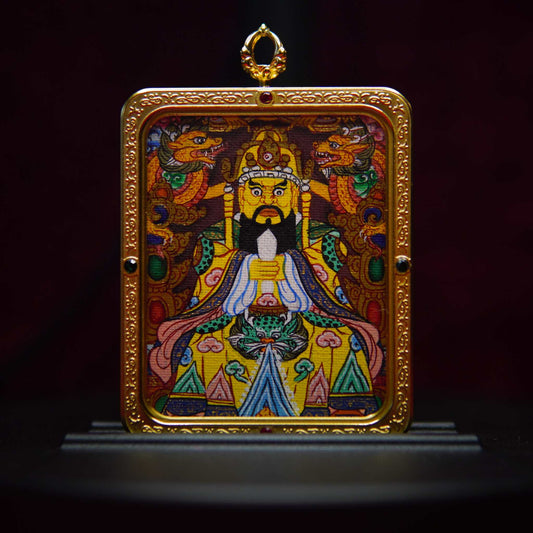
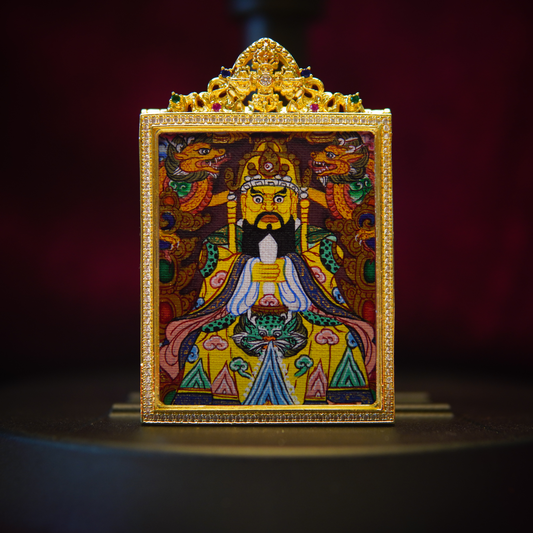
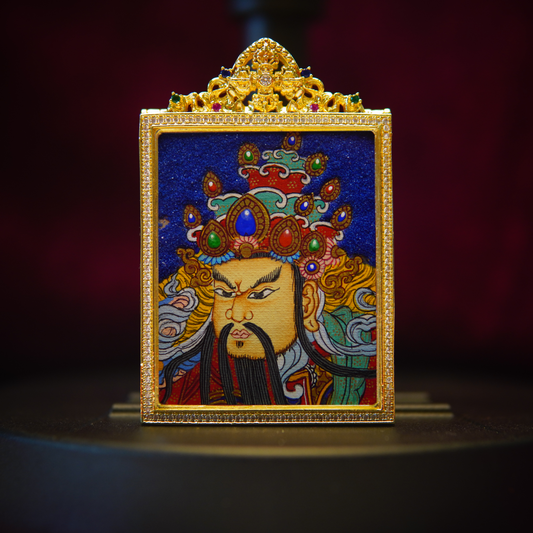
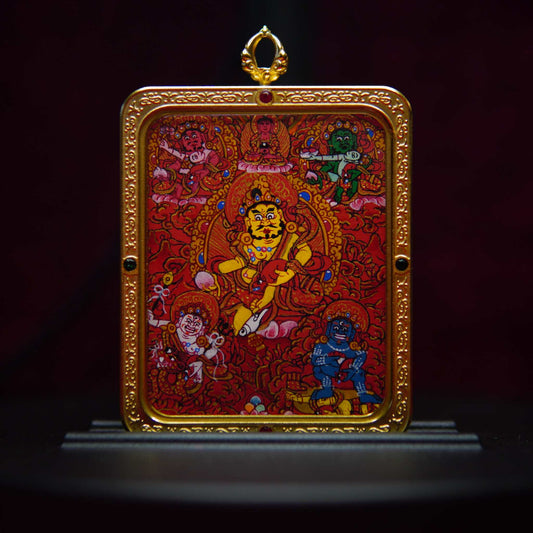
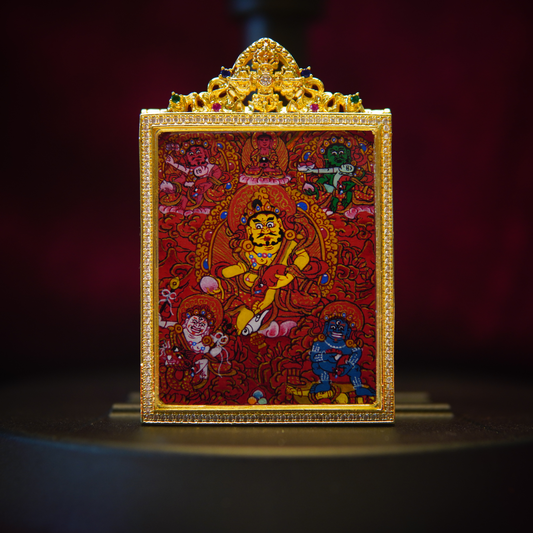
A hand-painted Wuye Thangka pendant brings the imagery of the Fifth Lord into something small enough to carry.
For some, it may hold devotional significance.
For others, it can symbolize:
💰 What you're working to build
🛡️ What you hope to protect
🙏 A wish you're carrying
🌿 The path you're trying to open
It isn't a guarantee that a particular wish will come true.
Its meaning lies in the connection between the image, the tradition behind it, and the person carrying it.
A blessing doesn't replace the journey. It travels with you.
→ Explore the Hand-Painted Wuye Thangka Pendant

❓Quick Questions About Wuye
Who is Wuye?
Wuye, meaning “Fifth Lord,” is the popular name associated with the Guangji Dragon King worshipped at Mount Wutai. Local legends commonly describe him as the fifth son of a Dragon King.
Is Wuye a Buddha?
Not in the straightforward sense. Wuye is better understood as a Dragon King guardian figure whose tradition developed within the intersection of Mount Wutai Buddhism, Chinese Dragon King beliefs, and local popular devotion.
What do people pray to Wuye for?
Devotees commonly bring wishes involving prosperity, livelihood, protection, favorable circumstances, safety, and personal aspirations.
Why is there an opera stage at Wuye Temple?
Local tradition holds that Wuye enjoys opera, and performances have historically been associated with honoring him and expressing gratitude.