Why Is Ksitigarbha Called the Bodhisattva of Hell? The Truth Behind His Great Vow
chenHenry🔥 Why Would a Bodhisattva Be Associated With Hell?
“Bodhisattva of Hell” sounds almost like a contradiction.
Bodhisattvas are associated with compassion.
Hell is associated with suffering.
Yet Ksitigarbha Bodhisattva, known as Dizang in Chinese Buddhism, became one of the Buddhist figures most closely associated with beings suffering in the hell realms.
So is Ksitigarbha the ruler of Buddhist hell?
No. Almost the opposite.
He is associated with hell not because he rules over suffering, but because Buddhist tradition remembers him as a bodhisattva whose compassion extends toward beings in some of the most painful and desperate conditions imaginable.
That difference changes everything.
Ksitigarbha is not frightening because he belongs to hell.
His story is powerful because he refuses to abandon those who suffer there.
 🪷 Who Is Ksitigarbha Bodhisattva?
Ksitigarbha (Kṣitigarbha), known as Dizang Bodhisattva in Chinese Buddhism, is a major Mahayana bodhisattva renowned for his vast vows to aid suffering beings.
His name is often translated as “Earth Treasury” or “Earth Store.”
Ksitigarbha became especially important in East Asian Buddhism, where he is widely associated with compassionate vows, beings in difficult realms, the deceased, and guidance through suffering.
In Tibetan Buddhist art, his appearance can differ from the familiar East Asian image of Dizang as a monk.
This is important for collectors.
Two paintings may look quite different and still belong to traditions associated with Ksitigarbha.
What remains central is not simply his clothing or posture.
It is the vow behind the image.
🔥 Why Is Ksitigarbha Associated With the Hell Realms?
Because his compassion is directed toward beings experiencing profound suffering.
The hell realms in Buddhist cosmology represent some of the most extreme states of suffering.
That makes them a powerful setting for Ksitigarbha's vow.
Imagine compassion as something easy:
help people when helping is convenient,
stay near those who are pleasant,
and leave when the situation becomes overwhelming.
Ksitigarbha represents almost the opposite.
His story asks:
What would compassion look like if it refused to leave even the most difficult place?
That is why the hell connection matters.
It shows the extent of the vow.
💀 Is Buddhist Hell the Same as Christian Hell?
Not exactly.
This is one of the easiest misunderstandings for Western readers.
Buddhist traditions describe multiple hell realms, often called Naraka realms, as states of extraordinarily intense suffering.
But they should not simply be treated as identical to every Christian conception of Hell.
One major difference is that Buddhist cosmology generally understands rebirth in hell realms as impermanent rather than eternal.
A being experiences the results of causes and conditions, but that state is not necessarily an everlasting sentence without end.
This matters when understanding Ksitigarbha.
He is not standing at the gates of an eternal prison deciding who enters.
His role in Buddhist imagination is connected with compassion toward beings caught in suffering.
That is a very different picture.
 👹 Is Ksitigarbha the King or Judge of Hell?
No.
This misconception often comes from mixing different figures in East Asian Buddhist and folk traditions.
Ksitigarbha is not best understood as:
“the Buddhist Satan,”
“the god who runs hell,”
or
“the judge who punishes the dead.”
Those descriptions fundamentally distort his identity.
Ksitigarbha is a bodhisattva.
The reason he appears in stories and imagery connected with difficult realms is compassion, not punishment.
This is perhaps the most important thing to understand about him.
He does not represent the suffering.
He represents the determination not to abandon beings within it.
🧭 Why Is Ksitigarbha Associated With Guidance?
Once the hell connection is understood, the idea of guidance becomes much easier to understand.
Someone who enters a difficult place to help others naturally becomes associated with:
direction,support,companionship,and finding a way through.
This is why Ksitigarbha can resonate strongly with people going through periods of uncertainty.
Grief.Loss.Family difficulty.A major transition.
A period when the future is unclear.
The traditional Buddhist context should not be replaced with modern self-help language.
But the symbolic connection is understandable:
Ksitigarbha does not represent a life without darkness. He represents compassion that does not disappear when darkness arrives.
🪷 What Is Ksitigarbha's Great Vow?
Ksitigarbha is famous for vast vows centered on aiding suffering beings.
In East Asian Buddhist tradition, this commitment is often summarized through the idea that he will continue working for beings in suffering rather than seeking his own final completion first.
This is the source of the famous cultural association between Ksitigarbha and the aspiration to help beings in the hell realms.
But the vow raises an obvious question.
If suffering beings are countless, how could such a task ever be completed?
That is exactly what makes the story so powerful.
→ Why Did Ksitigarbha Make a Vow So Impossible to Complete?
The apparent impossibility isn't a flaw in the story.
It may be the point.
🌿 Is Ksitigarbha Only Connected With Death?
No.
Because Ksitigarbha is so closely associated with the deceased and difficult realms in East Asian Buddhist culture, people sometimes assume his imagery is only appropriate after someone dies.
That is too narrow.
His broader symbolism includes:
🤍 Compassion
🧭 Guidance
🛡️ Protection
🪷 Great Vow
🌿 Perseverance
These themes can be meaningful during life as well.
Someone does not need to be grieving in order to connect with the idea of refusing to abandon others in difficult circumstances.
🎨 How Can You Recognize Ksitigarbha in Buddhist Art?
This can be more complicated than identifying a figure such as Medicine Buddha.
Ksitigarbha appears differently across Buddhist cultures.
In East Asian art, Dizang/Jizō is often depicted in monastic form.
In Tibetan Buddhist art, different compositions and iconographic forms may appear.
That means identification should not rely on one visual detail alone.
Look at:
🪷 The Central Figure — posture and attributes vary by tradition
✨ Halo & Sacred Surroundings — help establish the religious composition
🌿 Lotus and Landscape Imagery — may appear in different forms
👑 Ornaments or Monastic Appearance — depend on the specific artistic tradition
This variation is one reason knowing the deity's name and context matters.
📿 Why Carry a Ksitigarbha Thangka?
For Buddhist practitioners, Ksitigarbha may have specific devotional significance.
For others drawn to Buddhist symbolism, the image can carry a powerful message during periods when life feels uncertain or difficult.
Not:
“Nothing bad will happen to me.”
But:
“Compassion and perseverance still matter when things are difficult.”
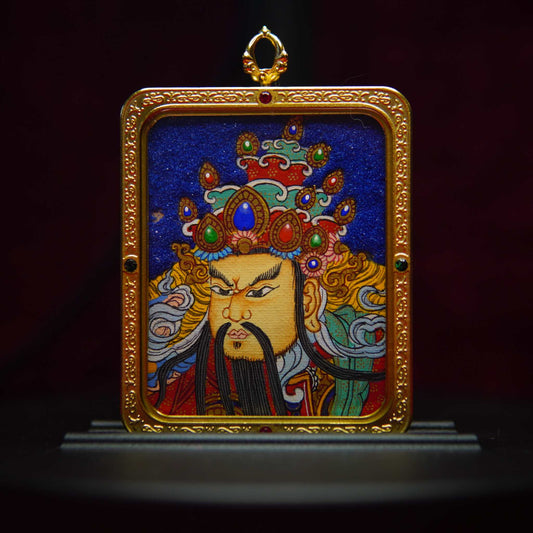
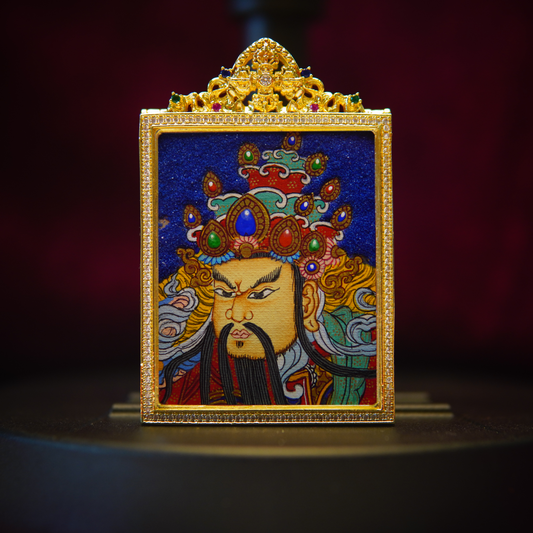
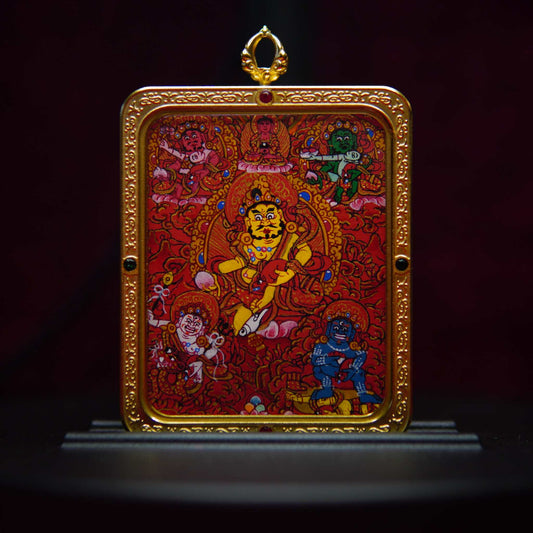
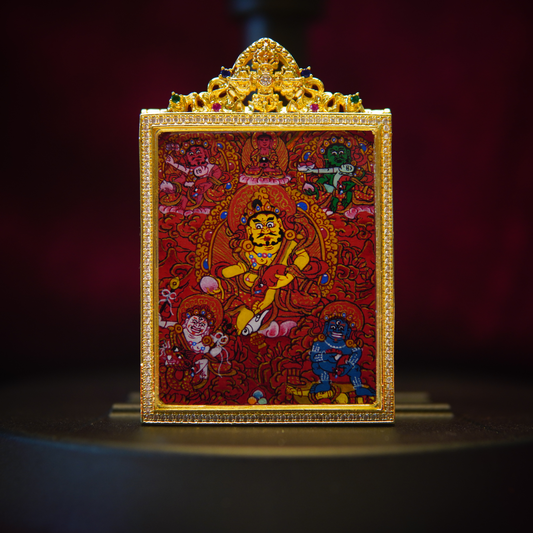
Our hand-painted Ksitigarbha Bodhisattva Tibetan Thangka pendant brings this imagery into a miniature format, with each piece individually painted by hand.
Subtle differences in expression, linework, color and surrounding imagery make every piece naturally unique.
It may be especially meaningful for someone drawn to:
🤍 Compassion
🧭 Guidance
🛡️ Protection
🌿 Perseverance
🪷 Commitment to helping others
→ Explore the Hand-Painted Ksitigarbha Bodhisattva Thangka Pendant

❓Quick Questions About Ksitigarbha
Why is Ksitigarbha associated with hell?
Ksitigarbha is associated with the hell realms because of his profound vows to aid beings experiencing extreme suffering—not because he rules or punishes them.
Is Ksitigarbha the ruler of Buddhist hell?
No. Ksitigarbha is a bodhisattva of compassion and vow, not a ruler or punishing judge of hell.
Is Buddhist hell eternal?
Buddhist hell realms are generally understood as impermanent states of rebirth rather than an eternal destination.
What does Ksitigarbha symbolize?
Ksitigarbha is especially associated with compassion, Great Vow, guidance, perseverance and helping beings in difficult conditions.