Why Is White Jambhala White? The Meaning Behind Wealth, Compassion & Relief From Hardship
chenHenry🤍 If Jambhala Is a Wealth Deity, Why Is This One White?
Yellow Jambhala makes intuitive sense to many first-time viewers.
Golden-yellow body.
Rich ornaments.
Treasure imagery.
Everything seems to say:
wealth.
Then you encounter White Jambhala.
He belongs to the broader Jambhala tradition and is also connected with prosperity, yet his appearance is strikingly different.
So why white?
Is White Jambhala simply a paler version of Yellow Jambhala?
No.
Color in Vajrayana Buddhist art is rarely just decoration. It can participate in a larger symbolic language of different activities and forms.
And understanding White Jambhala reveals something important:
Buddhist wealth symbolism is not only about accumulating more. It can also be about relieving conditions of scarcity and hardship.
 💰 Who Is White Jambhala?
White Jambhala is a form of Jambhala within Tibetan Buddhist tradition, associated with prosperity, material support and the alleviation of difficult conditions.
Jambhala is commonly described in English as a Buddhist wealth deity.
But Jambhala does not appear in only one form.
You may encounter:
Yellow Jambhala,
Red Jambhala,
Green Jambhala,
Black Jambhala,
and White Jambhala.
They share a broader relationship with prosperity, but their colors, iconography and traditional activities should not simply be treated as cosmetic variations.
White Jambhala has his own identity within this larger family.
🤍 Why Is White Jambhala White?
White is an important color within Vajrayana Buddhist visual and ritual systems and is often associated with pacifying activity.
But it is important not to turn this into an oversimplified formula:
white = peace.
The specific deity and tradition still matter.
For White Jambhala, the white form belongs to a particular Jambhala identity and helps distinguish his activity from other Jambhala forms.
This means his color should be understood within the complete image rather than through modern color psychology.
White Jambhala is not white because:
white looks pure,
or because:
white attracts money.
The color belongs to a much older Buddhist symbolic system.
🌿 What Does “Pacifying Activity” Mean?
The word pacifying can sound vague in English.
It doesn't simply mean:
being calm.
Within Vajrayana contexts, pacifying activity can concern the calming or alleviation of adverse conditions and obstacles.
This is one reason the white form can be especially interesting within the Jambhala tradition.
Jambhala is connected with prosperity and material support.
White imagery introduces a different emphasis from the obvious idea of simply increasing wealth.
The focus can move toward:
relief,support,well-being,and the easing of difficult circumstances.
This creates a very different emotional tone from:
“Get rich.”
💰 Is White Jambhala Still a Wealth Deity?
Yes.
White Jambhala still belongs to the broader Jambhala wealth tradition.
But the word wealth needs context.
Modern marketing often treats wealth as:
more money.
Buddhist prosperity imagery can be understood more broadly through the material conditions necessary to reduce hardship and support life.
Food matters.Shelter matters.Medicine matters.Resources matter.Financial stability matters.
Scarcity can create real suffering.
So wealth symbolism does not need to mean endless accumulation.
It can also point toward:
having enough.
That distinction is especially useful when understanding White Jambhala.
 🪷 Is White Jambhala About Getting Rich?
Not simply.
A White Jambhala image should not be marketed as:
“Wear this and money will come.”
That reduces a Buddhist religious figure to a financial superstition.
A more meaningful way to understand Jambhala imagery is through the relationship between:
resources and suffering caused by scarcity.
Material support can create stability.
Stability can make generosity possible.
Resources can support families, communities and spiritual practice.
That gives prosperity a purpose beyond accumulation.
🤲 Why Does Generosity Matter?
Imagine two images of wealth.
In the first:
everything flows inward.
More money.
More possessions.
More for me.
In the second:
resources can also flow outward.
Supporting family.
Helping someone in difficulty.
Funding useful work.
Supporting religious or charitable activity.
These two relationships with wealth are very different.
Generosity is one reason Buddhist prosperity symbolism should not be understood only through personal financial gain.
Jambhala becomes more meaningful when abundance is connected with the possibility of benefiting others.
🟡 White Jambhala vs Yellow Jambhala: What's the Difference?
Both belong to the Jambhala tradition.
Both can be associated with prosperity.
But they should not simply be treated as:
the same deity in two colors.
Yellow Jambhala
Especially well known through:
💰 Wealth
🌿 Abundance
🏠 Material Support
🤲 Generosity
White Jambhala
Can be understood through:
💰 Prosperity
🤍 Pacifying Activity
🌿 Relief from Difficult Conditions
🤲 Support & Generosity
This isn't a ranking.
Yellow Jambhala is not “better for money.”
White Jambhala is not “more spiritual.”
The forms simply carry different iconographic and traditional emphases.
👹 Why Doesn't White Jambhala Always Look Peaceful?
This is another interesting detail.
Modern viewers often assume:
white deity = peaceful appearance.
But tantric Buddhist iconography doesn't always follow that expectation.
Color and facial expression can communicate different layers of meaning.
A white form can still appear powerful or even wrathful.
That is why interpreting Buddhist art through a single visual clue can be misleading.
Always look at the complete figure:
color,posture,face,attributes,surrounding imagery,and deity identity.
🎨 How Can You Recognize White Jambhala in a Thangka?
Start with the obvious clue:
🤍 White Body
Then examine the rest of the composition.
Depending on the specific form and painting, you may notice:
👑 Crown & Ornaments — richly decorated sacred appearance
👐 Ritual Attributes — important for identifying the specific form
🌈 Vivid Surrounding Colors — blue, red, turquoise, orange and gold may contrast with the white body
🪷 Sacred Buddhist Imagery — clouds, lotuses and other details vary between paintings
👹 Powerful Expression — reminding us that white does not automatically mean visually gentle
The complete image matters more than any one detail.
📿 Why Choose a White Jambhala Thangka Pendant?
White Jambhala may resonate particularly with someone drawn to prosperity understood through more than simple accumulation.
His imagery can evoke:
💰 Prosperity
🤍 Pacifying Activity
🌿 Relief from Hardship
🤲 Generosity
🪷 Supportive Conditions
For Buddhist practitioners, White Jambhala may have specific religious significance.
For collectors and others interested in Tibetan Buddhist art, the image offers a different perspective on what a “wealth deity” can mean.
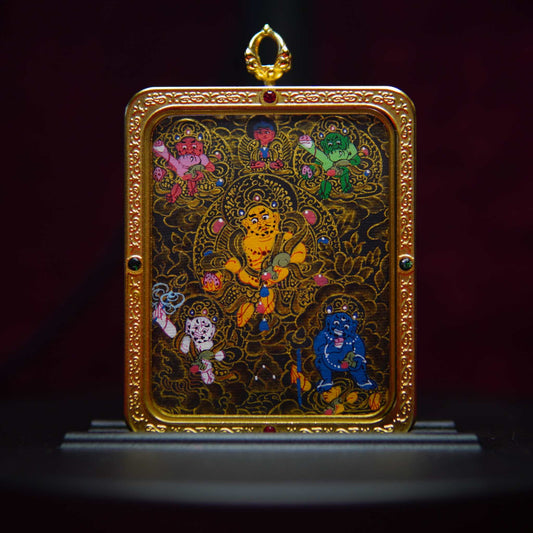
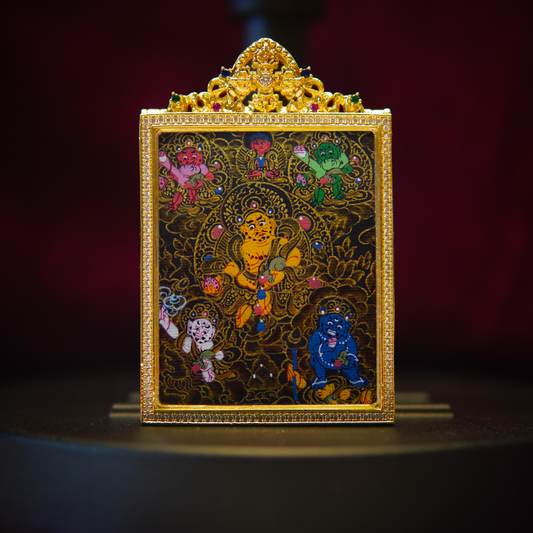
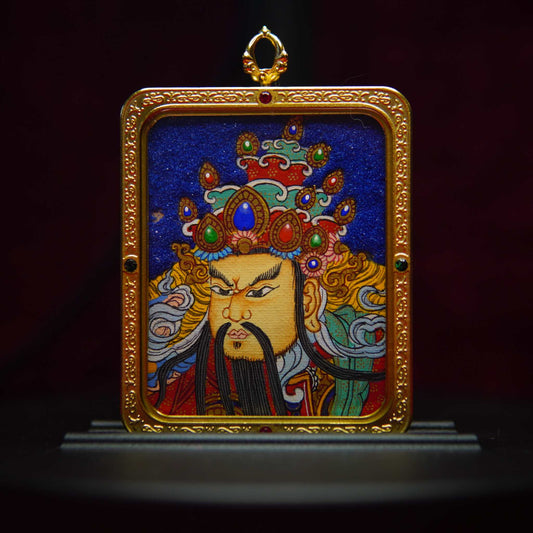
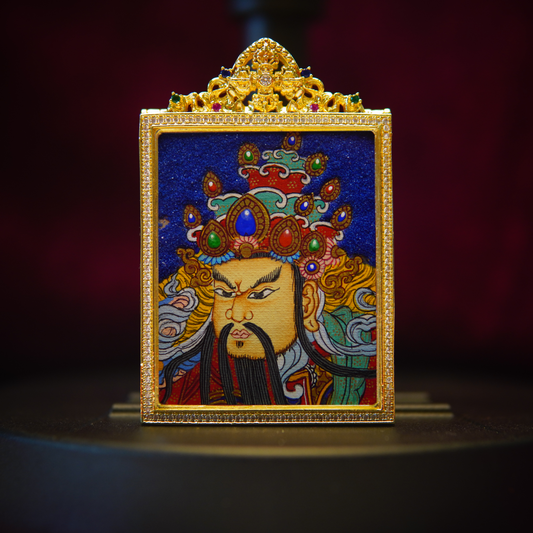
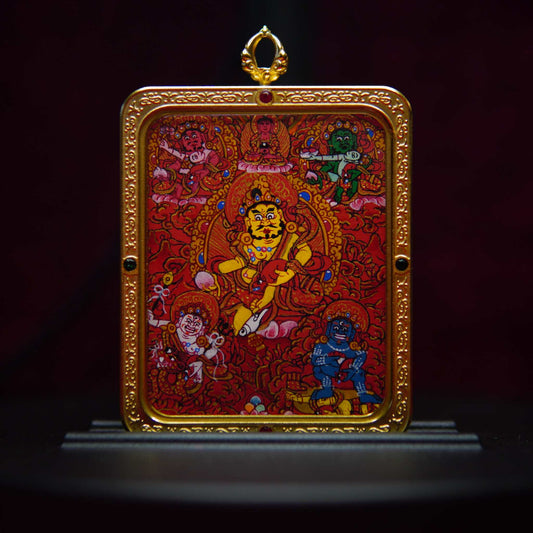
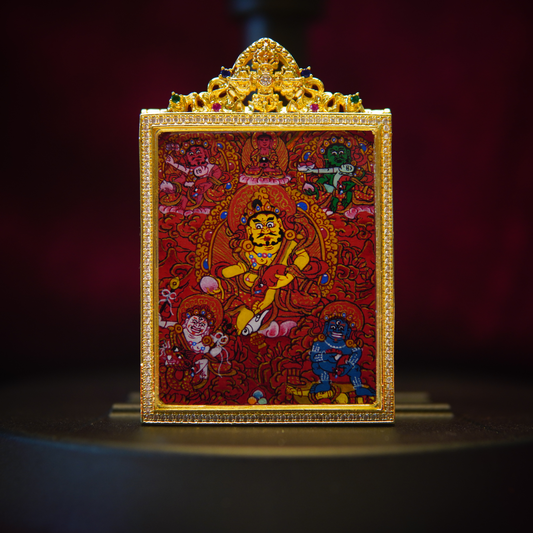
Our hand-painted White Jambhala Tibetan Thangka pendant preserves this imagery within a miniature painting, with each piece individually painted by hand.
Subtle differences in expression, linework and color naturally make every piece unique.
→ Explore the Hand-Painted White Jambhala Thangka Pendant

But White Jambhala isn't the only white Buddhist figure associated with prosperity.
That leads to a surprisingly common question:
→ White Jambhala vs White Mahakala: What's the Difference?
❓Quick Questions About White Jambhala
What does White Jambhala represent?
White Jambhala belongs to the broader Jambhala prosperity tradition and can be associated with material support, pacifying activity and the alleviation of difficult conditions.
Why is White Jambhala white?
White participates in Vajrayana Buddhist systems of color symbolism and is commonly associated with pacifying activity, although the exact meaning must be understood through the specific deity and tradition.
Is White Jambhala a wealth deity?
Yes. White Jambhala is a form of Jambhala, a Buddhist deity family strongly associated with prosperity and material support.
Does White Jambhala guarantee wealth?
No. A White Jambhala image can carry devotional or symbolic meaning but should not be presented as guaranteeing financial outcomes.